Same-Sex Rights at the Forefront of India’s General Election Promises
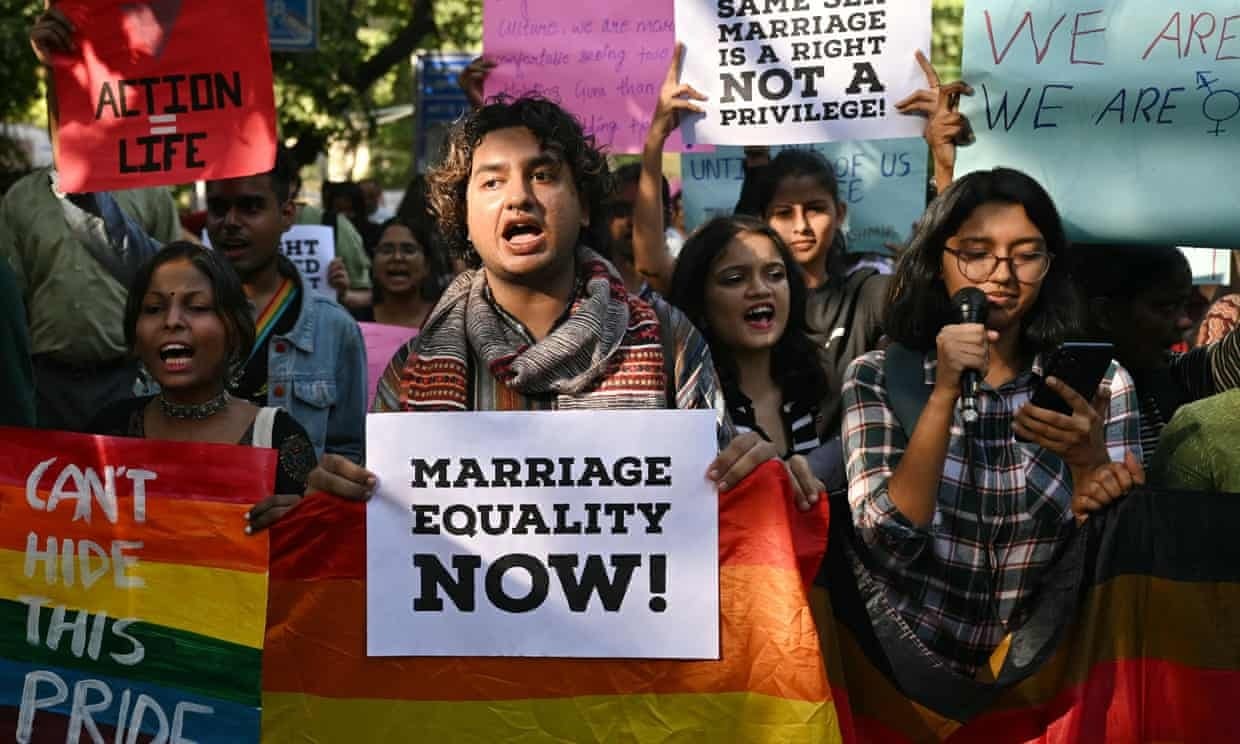
In a significant move ahead of India’s general election, the nation’s two principal political factions have pledged to enhance the lives of LGBTQ+ individuals. However, activists within the community express skepticism, pointing out that both parties are skirting around the pivotal issue of same-sex marriage.
While there has been some headway in LGBTQ+ rights, the social acceptance of same-sex relationships in India is still fraught with challenges. The Supreme Court’s refusal last year to legalize gay marriage was a blow to the community, marking a pause in the progress towards equality.
The incumbent Bharatiya Janata Party (BJP), led by Prime Minister Narendra Modi, is anticipated to secure a third term. Despite opposing same-sex marriage, the BJP has outlined in its manifesto a commitment to provide more shelters, national ID cards, and public health insurance access for transgender individuals.
Conversely, the opposition Congress party has taken a slightly different stance, proposing the introduction of laws to recognize same-sex civil unions and amendments to the constitution that would ban discrimination based on sexual orientation. However, their plans have been criticized for being too vague and not going far enough to address the community’s needs.
Activists like Noor Enayat from Mumbai have voiced their discontent, labeling these political promises as mere “lip service.” The lack of immediate responses from either the BJP or Congress to these criticisms has only added to the frustration.
The plight of LGBTQ+ individuals in India is underscored by widespread discrimination and abuse. Despite legal advances such as the 2014 judgment recognizing trans people as a third gender, many in the LGBTQ+ community continue to face obstacles in obtaining employment, healthcare, education, and housing.
Transgender activists like Grace Banu from Chennai are calling for more targeted rights and policies that address the unique challenges faced by trans individuals, particularly trans women who often resort to begging or sex work due to societal rejection.
While the Communist Party of India (Marxist) has been noted for its LGBTQ-friendly manifesto, it too stops short of advocating for full marriage equality. With Modi’s party leading in opinion polls, activists like Ankit Bhuptani suggest that the LGBTQ+ community should work towards engaging with the BJP to foster understanding and acceptance.
The call for a more comprehensive strategy towards LGBTQ+ issues in India is clear. Activists are urging for a shift from confrontation to collaboration, with hopes that this will pave the way for greater social justice and equality for the LGBTQ+ population.