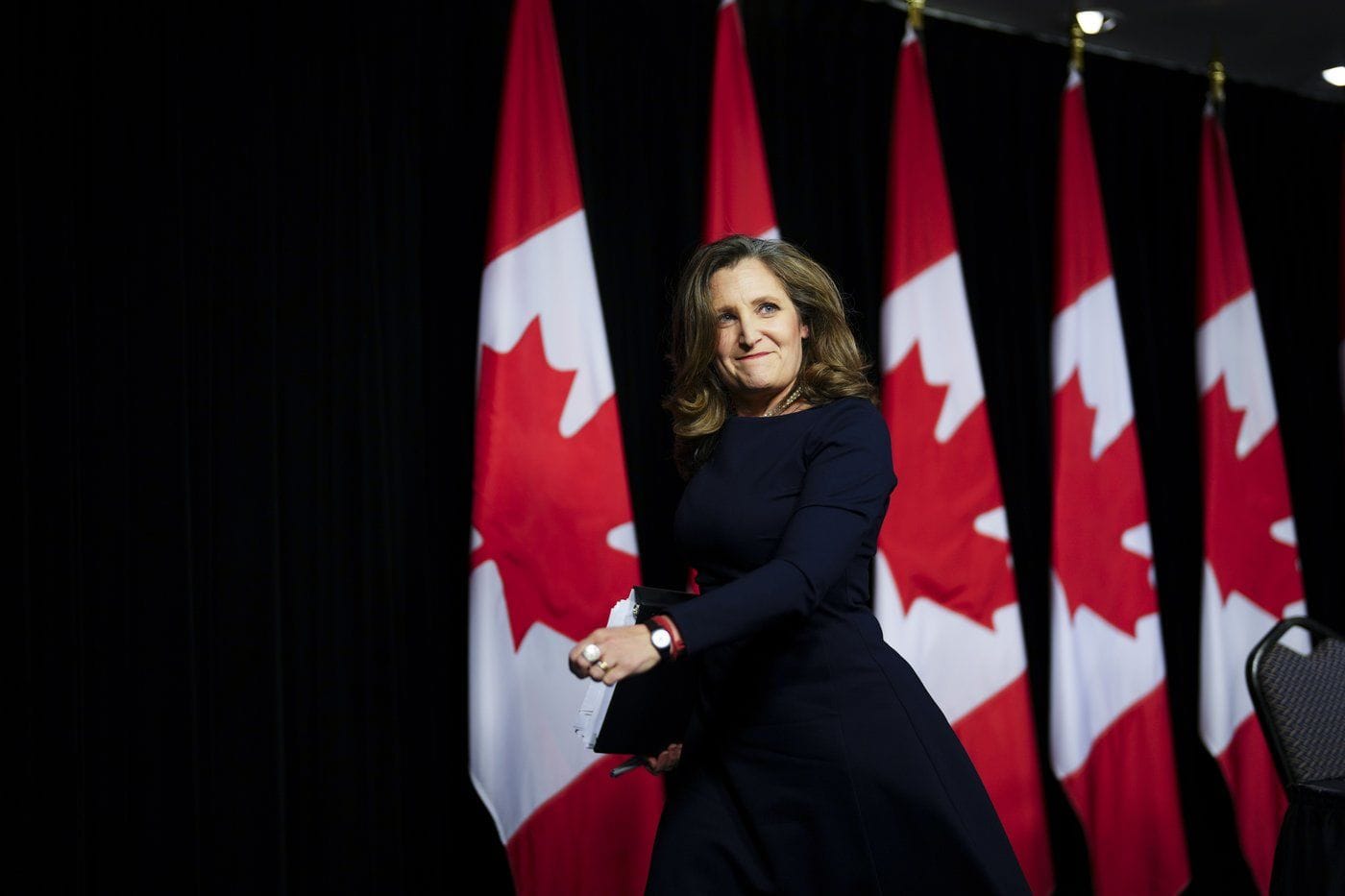
Finance Minister Unveils Budget with Focus on Economic Justice
In a significant move to address economic disparities, Finance Minister Chrystia Freeland presented a federal budget that introduces $53 billion in new spending aimed at fostering economic justice, particularly for the younger generations. The budget, which was delivered in the House of Commons, is designed to build more homes swiftly, reduce living costs, and stimulate economic growth that benefits all Canadians.
Freeland’s fiscal plan is underpinned by a commitment to keep the deficit under control, capping it at $40 billion. This has been made possible by a combination of higher-than-expected government revenues and the introduction of new taxes that largely counterbalance the new spending.
The Liberal government has outlined a strategy to fund its new initiatives by imposing higher taxes on the wealthiest individuals and businesses in Canada. A key feature of this strategy is the proposed increase in the capital gains inclusion rate. The taxable portion of capital gains exceeding $250,000 is set to rise from 50% to two-thirds, a measure expected to impact only 0.1% of Canadians while generating nearly $20 billion in revenue over the next five years. This tax increase will also apply to all capital gains realized by corporations and trusts.
Despite potential pushback from those affected by the tax increase, Freeland has urged Canada’s wealthiest to consider the broader implications for the country’s future. The government’s stance is that these measures are necessary steps towards shaping a more equitable Canada.
Dan Kelly, president of the Canadian Federation of Independent Business, noted that while the capital gains inclusion rate hike might disadvantage medium-sized business owners, small businesses stand to benefit from the increased lifetime capital gains exemption, which has been raised from approximately $1 million to $1.25 million. Additionally, the Canadian Entrepreneurs’ Incentive will further reduce the inclusion rate for eligible capital gains.
TD’s director of economics, James Orlando, commented on the federal spending trajectory, noting that despite an uptick in the deficit forecast, the government remains within its self-imposed fiscal boundaries. Orlando highlighted that while these measures may support economic growth, they could pose challenges for the Bank of Canada’s inflation control efforts.
With a focus on affordability and housing, the budget also allocates funds for initiatives aimed at enhancing productivity within the economy. This includes significant investments in artificial intelligence and research support, which are anticipated to yield benefits in technology development and productivity in the coming years.