A New Seat of Power in Northern Cyprus
In a significant move that underscores the Turkish Republic of Northern Cyprus’s (TRNC) aspirations for self-governance, a grand construction project is underway. The new official residence for Ersin Tatar, the leader of the TRNC, is being built in Ayios Dhometios, a testament to what Turkish Ambassador Metin Feyzioglu describes as the “strength of the TRNC’s democracy.”
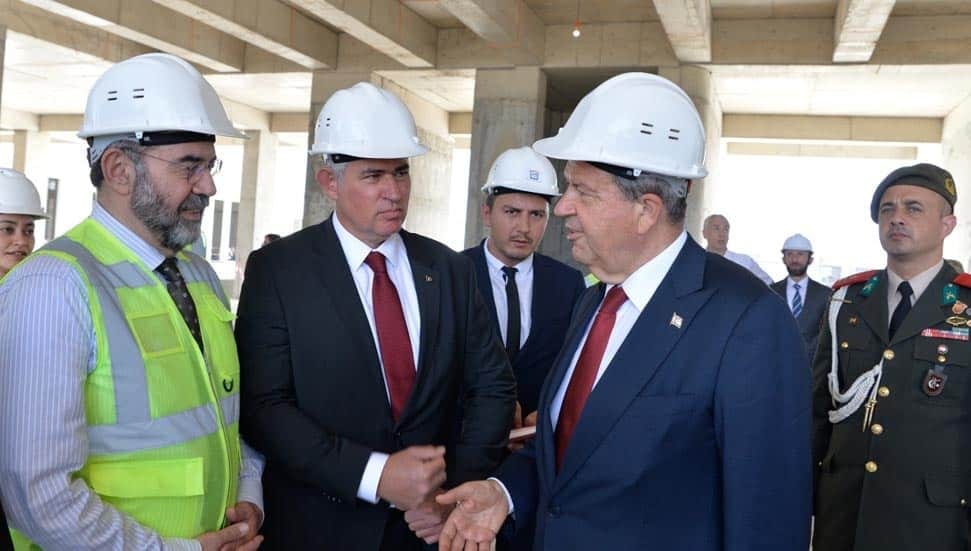
During a recent tour of the expansive 400,000 square meter site, Feyzioglu expressed his belief that the new complex would forge a stronger connection between Turkish Cypriots and their leader. The ambitious project not only includes a residence for Turkish Cypriot leaders but also plans for a new building to house the north’s ‘parliament’. This marks a significant upgrade from its current location in a repurposed cigarette factory in northern Nicosia’s Koskluciftlik neighborhood.
Ersin Tatar, who also surveyed the ongoing construction, shared his view that the project conveys “a great message to the world in terms of the Turkish Cypriots’ will, independence, and ability to govern themselves.” This development is poised to become a symbol of pride and political stature within the region.
As the TRNC continues to build its governmental infrastructure, such developments are closely watched by those interested in the geopolitics of the region, including stakeholders in the concept of Cyprus permanent residency. For individuals considering permanent residence in Cyprus, particularly in the context of the TRNC, these developments may signal a strengthening local governance and potential changes in the landscape of permanent residency in Cyprus.
The project’s completion is eagerly anticipated by both local residents and international observers, as it represents not just a physical structure but also an embodiment of the TRNC’s quest for recognition and self-determination. The new complex stands as a beacon of hope for many Turkish Cypriots who see it as a milestone in their journey towards a more robust and independent political identity, potentially influencing the future discourse around Cyprus permanent residence and residency policies.