Japanese Yen Weakness Persists Amid Unchanged Monetary Policy
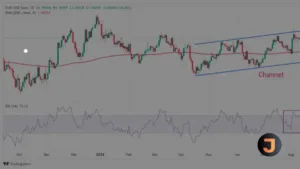
The Japanese Yen continues to experience a downward trend, hitting a more than 30-year low against the US Dollar. This comes in the wake of the Bank of Japan’s (BoJ) decision to maintain its monetary policy settings, keeping interest rates between 0% and 0.1%. The announcement led to the Yen trading at its weakest since May 1990, with the USDJPY pair soaring above 156.50.
Adding to the currency’s woes, the BoJ has also modified its stance on government bond purchases, removing the reference to its monthly target of approximately 6 trillion JPY. Despite this, BoJ Governor Kazuo Ueda acknowledged the possibility of a prolonged
Meanwhile, the US economic landscape is showing signs of sustained inflationary pressures. The Personal Consumption Expenditures (PCE) Price Index data, a key indicator for the Federal Reserve, is anticipated to reflect ongoing firm price pressures. This has led markets to adjust expectations regarding the timing of potential Fed rate cuts.
In contrast to the Yen’s performance, the USD Index (DXY) experienced a slight dip after reports indicated a slower-than-expected expansion of the US economy in Q1. However, an increase in the GDP price deflator helped mitigate losses for the DXY, which hovered above 105.50 early Friday. Similarly, US Treasury yields remained elevated near 4.7% following a significant rise.
On the equity front, US stock index futures enjoyed gains in European markets, suggesting an uptick in risk sentiment. Currency pairs such as EURUSD and GBPUSD also showed signs of strength, with the former reaching a two-week high and the latter maintaining its upward trajectory around 1.2500.
Gold, often seen as a safe-haven asset, saw a modest increase but struggled to maintain momentum against rising US yields. XAUUSD managed to stay in positive territory above $2,340 in early Friday trading.
As investors digest these developments, all eyes remain on the interplay between global currencies and the economic indicators that continue to shape monetary policy decisions on both sides of the Pacific.