Concerns Rise Over Solar Development on Prime Cropland
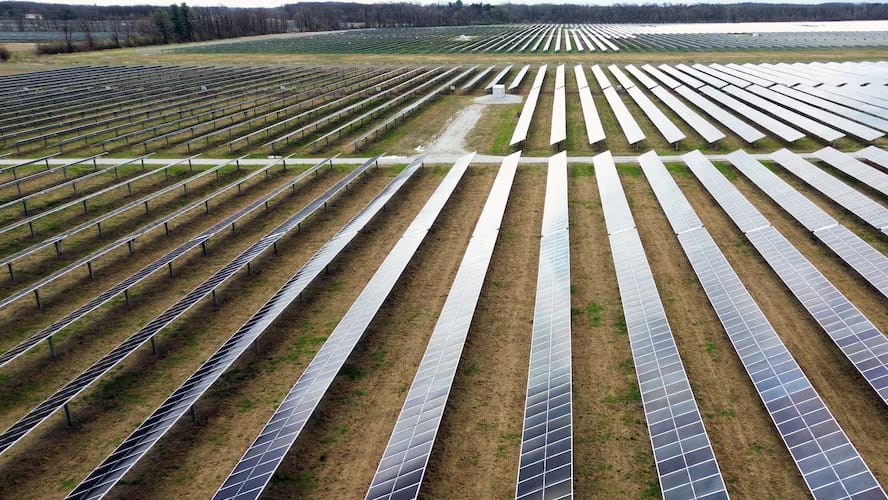
In the heart of Indiana’s agricultural belt, Dave Duttlinger’s farm near Wheatfield has become a focal point for a growing debate. Dave Duttlinger leased 445 acres of his Indiana farm to Dunns Bridge Solar LLC for a solar development project, despite concerns about damage to his land. The project, one of the largest solar developments in the Midwest, has sparked questions about the balance between renewable energy expansion and the preservation of America’s most productive cropland.
The solar panels were installed on some of the most productive cropland classified by the USDA, impacting future crop potential. This land is part of Duttlinger’s 1,200-acre farm, which has been cultivated by his family for generations. The lease agreement with Dunns Bridge Solar, a subsidiary of NextEra Energy Resources LLC, promised to minimize damage to the land. However, construction activities have led to significant soil erosion, leaving Duttlinger worried about the long-term fertility of his fields.
As the solar industry pushes into the U.S. Midwest, attracted by cheaper land rents and a wealth of federal and state incentives, there is concern that the renewable energy boom could be damaging some of America’s richest soils. The region’s wide-open fields are ideal for solar arrays, but they are also crucial for food production. In Indiana and surrounding states, solar leases can offer lucrative returns compared to traditional farming rents, tempting many landowners to make the switch.
Yet, some renewable energy developers are exploring ways to coexist with agriculture, such as designing sites that allow crops to grow between panels or using livestock to graze around them. Despite these efforts, agricultural economists and agronomists warn that removing even small portions of prime cropland for solar development could have significant impacts on future crop potential in the United States.
With the U.S. aiming to decarbonize its energy market by 2050, the need for solar capacity is set to increase dramatically. However, this expansion comes at a time when competition for land is intensifying. According to USDA data, there has been a significant reduction in farm acreage due to various forms of development.
While the USDA acknowledges that urban sprawl is a more significant contributor to farmland loss than solar development, the tension between these competing land uses remains a topic of intense debate. As renewable energy firms argue for the necessity of solar in transitioning to electric vehicles and combating climate change, farmers like Duttlinger are left weighing the immediate financial benefits against the long-term viability of their land.