Stalemate in Cyprus Gasfield Development
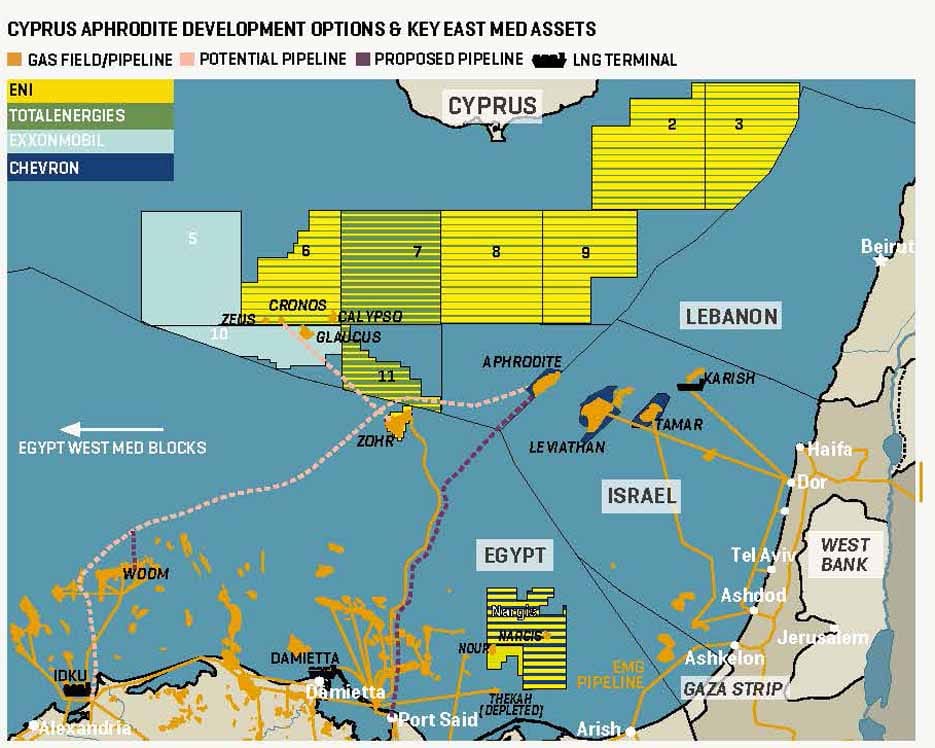
In a bold move, Nicosia has rejected Chevron’s revised optimization plan for the Aphrodite offshore gasfield, standing firm on the original 2019 development plan. The Aphrodite gasfield, discovered in 2011, is estimated to hold 3.5 trillion cubic feet (tcf) of gas and represents Cyprus’s first major gas discovery.
Chevron, which became the operator after acquiring Noble Energy in 2020, had submitted a new proposal that aimed to reduce costs by $1 billion and lower output from the Cyprus exclusive economic zone (EEZ). However, this plan also involved scrapping the floating production unit (FPU) and reducing the number of wells from five to three, resulting in a decreased production rate of 650 million cubic feet per day (cfd).
The original 2019 plan required Chevron and its partners to hit several development milestones, including launching front-end engineering design (FEED) by November 7, 2023. With this deadline looming and unlikely to be met, tensions have escalated, leading to a series of claims and counter-claims.
Despite agreeing in December to re-file an “optimized” development plan more aligned with the 2019 version, Chevron’s latest submission in March still fell short of expectations. The new proposal suggested retaining the FPU but with an even lower output of 400-600 million cfd from four wells. Savings were to be found through a shorter subsea pipeline to Port Said, potentially sharing infrastructure with Eni’s Zohr field.
However, Eni’s plans for its own Cyprus Block 6 discoveries, including the 2.5tcf Cronos field, seem to conflict with Chevron’s proposals. MEES reports that Eni has not warmly received the idea of combining Aphrodite’s development with Cronos.
As negotiations continue, the future of the Aphrodite gasfield hangs in the balance. Nicosia’s latest communication could be a final stance or a bargaining chip. The US major faces a tough decision: proceed with the project under less favorable conditions or risk breaching contract and souring diplomatic relations.
Meanwhile, Eni CEO Claudio Descalzi’s recent visit to Cyprus underscores the urgency to develop Cronos and address regional energy needs. While Cairo eagerly awaits additional gas supplies to alleviate power shortages, Chevron’s requirement for another appraisal well at Aphrodite suggests further delays in Cyprus’s quest to become a significant player in the Mediterranean energy landscape.