Larnaca Port Operations Halted Amid Dockworkers Strike
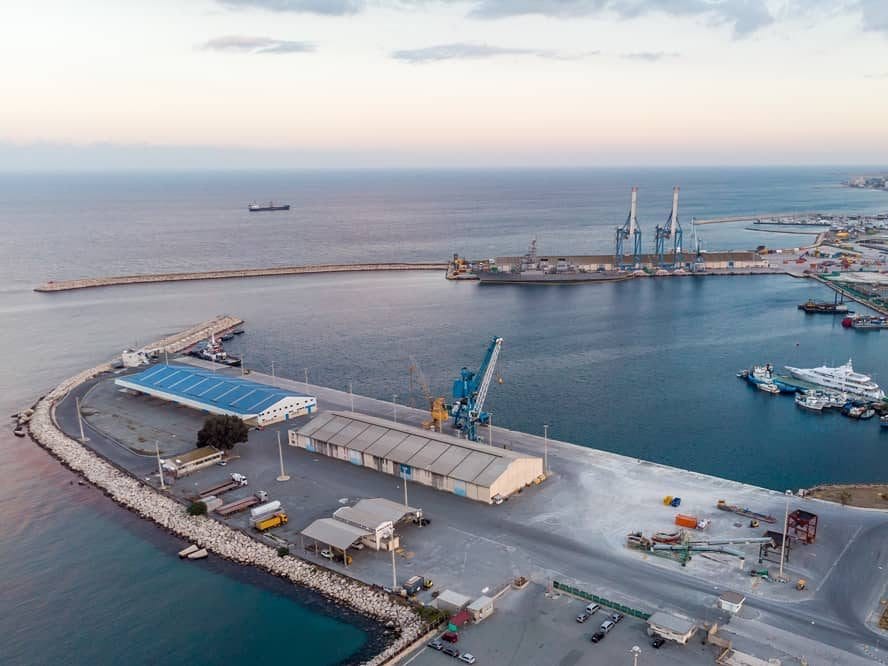
The bustling activity at Larnaca port has been brought to a sudden halt as dockworkers strike, insisting on the fulfillment of their overtime pay demands. The strike, which commenced on Wednesday, has shown no signs of abating, with workers determined to continue until their conditions are met.
Employers and business leaders have expressed their discontent with the situation. The Employers’ Federation has deemed the strike “unacceptable,” and the island’s Chamber of Commerce has voiced concerns that not only the port but also the broader economy is being held hostage by the current impasse.
Efforts to mediate the dispute by Cyprus Transport Minister Alexis Vafeadis have so far been unsuccessful, leading to expectations that the issue will soon be escalated to the Labour Ministry. This is not the first time that contractual and labour disputes have disrupted operations at Larnaca port and marina. Just last month, a financial deadlock was resolved when Vafeadis facilitated a compromise between the government and the operator for the continuation of a €1.2 billion project.
Trade unions are accusing port operator Kition Ocean Holdings of breaching collective labour agreements concerning overtime work. Union officials from SEK and PEO have also raised concerns about the use of non-union staff for after-hours work. Despite a previous strike in February leading to an agreed work schedule from 7:30 am to 3:30 pm, tensions have flared up once again.
The Employers and Industrialists’ Federation (OEB) has criticized the strike as unnecessary and a violation of the Industrial Relations Code. OEB highlighted that such actions create significant issues for traders, other workers, consumers, and the economy at large. They also pointed out the need for a regulatory framework to manage strikes within essential services.
The Cyprus Chamber of Commerce and Industry (KEBE) has reiterated these sentiments, emphasizing the negative impact on traders due to the uncontrolled actions of a segment of the workforce. KEBE has urged the government and parliament to prioritize legislation that regulates strikes in essential services to prevent such situations from recurring in the future.
As negotiations continue behind closed doors, the ripple effects of the dockworkers strike are being felt across various sectors reliant on the port for import and export activities. The standoff serves as a stark reminder of the delicate balance between labour rights and economic stability.