The Echoes of Nakba: Rafah’s Displacement Crisis Intensifies
As the anniversary of the Nakba looms, the situation in Rafah grows increasingly dire. Israeli forces are massing on the outskirts of Rafah in Gaza, stirring deep-seated fears among the Palestinian population of a repeat of the historical trauma they endured in 1948. The term “Nakba,” which translates to catastrophe, is a poignant reminder of when 700,000 Palestinians were uprooted from their homes with the establishment of Israel.
Many people in Rafah have been displaced multiple times as Israel continues to bombard Gaza in its conflict with Hamas. The relentless airstrikes have forced residents like Mohammad Emad and his family to seek safety in Deir Al-Balah, a central town in Gaza. Emad reflects on his family’s past, drawing parallels between the current crisis and the stories of 1948 passed down through generations. “I think what happened in 1948 didn’t come close to how brutal our present Nakba is,” he shares with a heavy heart.
In the aftermath of the original Nakba, Palestinians found refuge across Arab states and some in Gaza itself. However, today’s reality presents a grim picture with closed borders and scarce safe havens. Despite international mediators’ efforts, a lasting ceasefire remains elusive, and recent Israeli military operations have resulted in significant casualties and injuries.
The United Nations and various aid organizations warn that further incursions into Rafah could precipitate a humanitarian disaster. While Israel maintains its actions are necessary to confront Hamas fighters allegedly entrenched in the city, the offensive has also displaced countless Palestinians who had previously fled from northern combat zones.
The war, which erupted last October, has inflicted severe damage on Gaza’s infrastructure, exacerbating shortages of essential supplies and compounding the population’s suffering. Um Zaki, who has been displaced thrice since leaving Gaza City, recounts the exorbitant costs of transportation and shelter amidst the chaos. “I paid $1,000 just for transport and a tent,” she laments, highlighting the war’s economic impact on civilians.
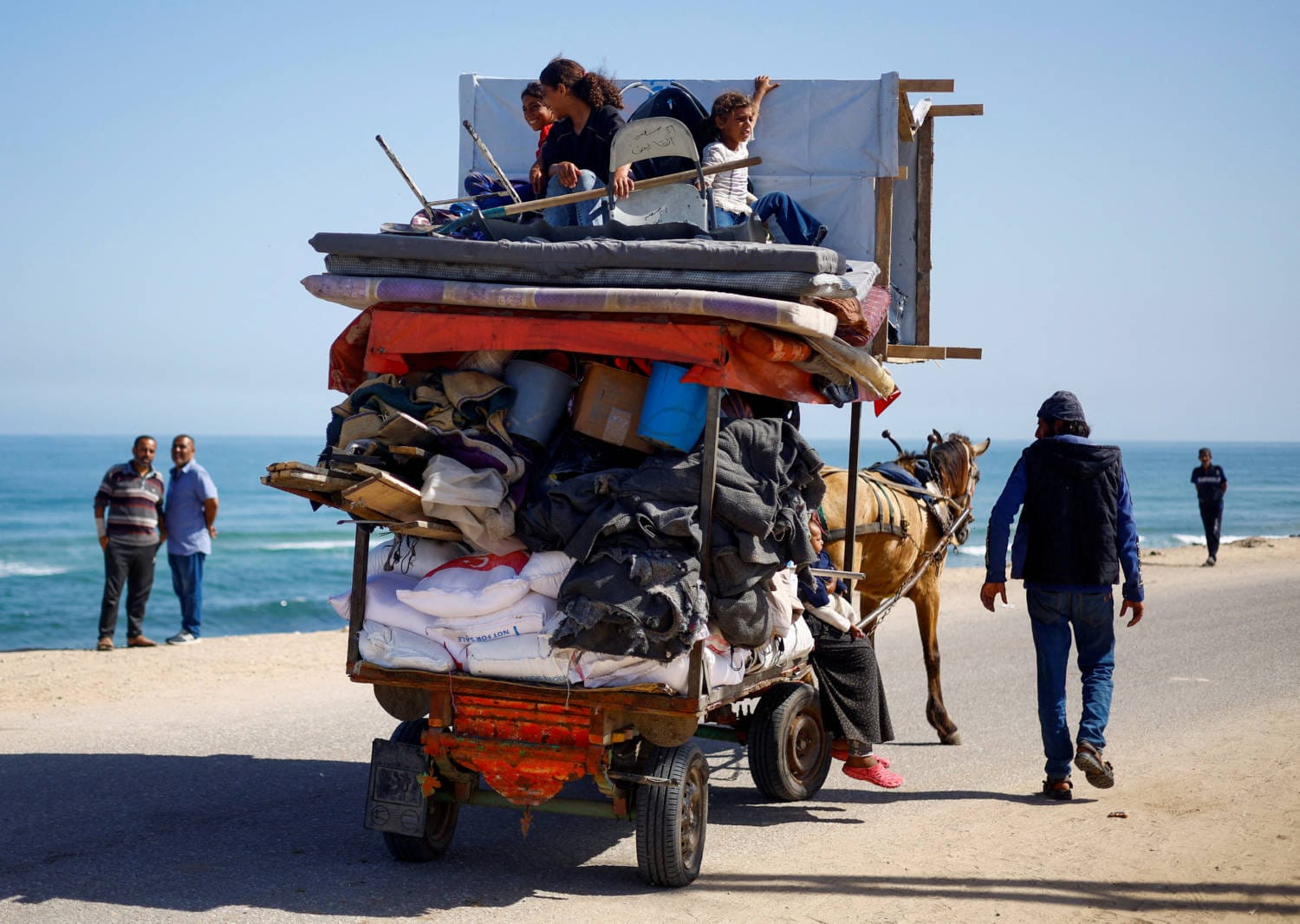
As families like the Al-Kafarnas depart Rafah with their belongings loaded onto horse-drawn carts, a sense of helplessness pervades. Laila Al-Kafarna, mother to a baby born during the conflict, questions the rationale behind their suffering. “What is the fault of these children – what can we say?” she asks, encapsulating the despair felt by many as they face an uncertain future.