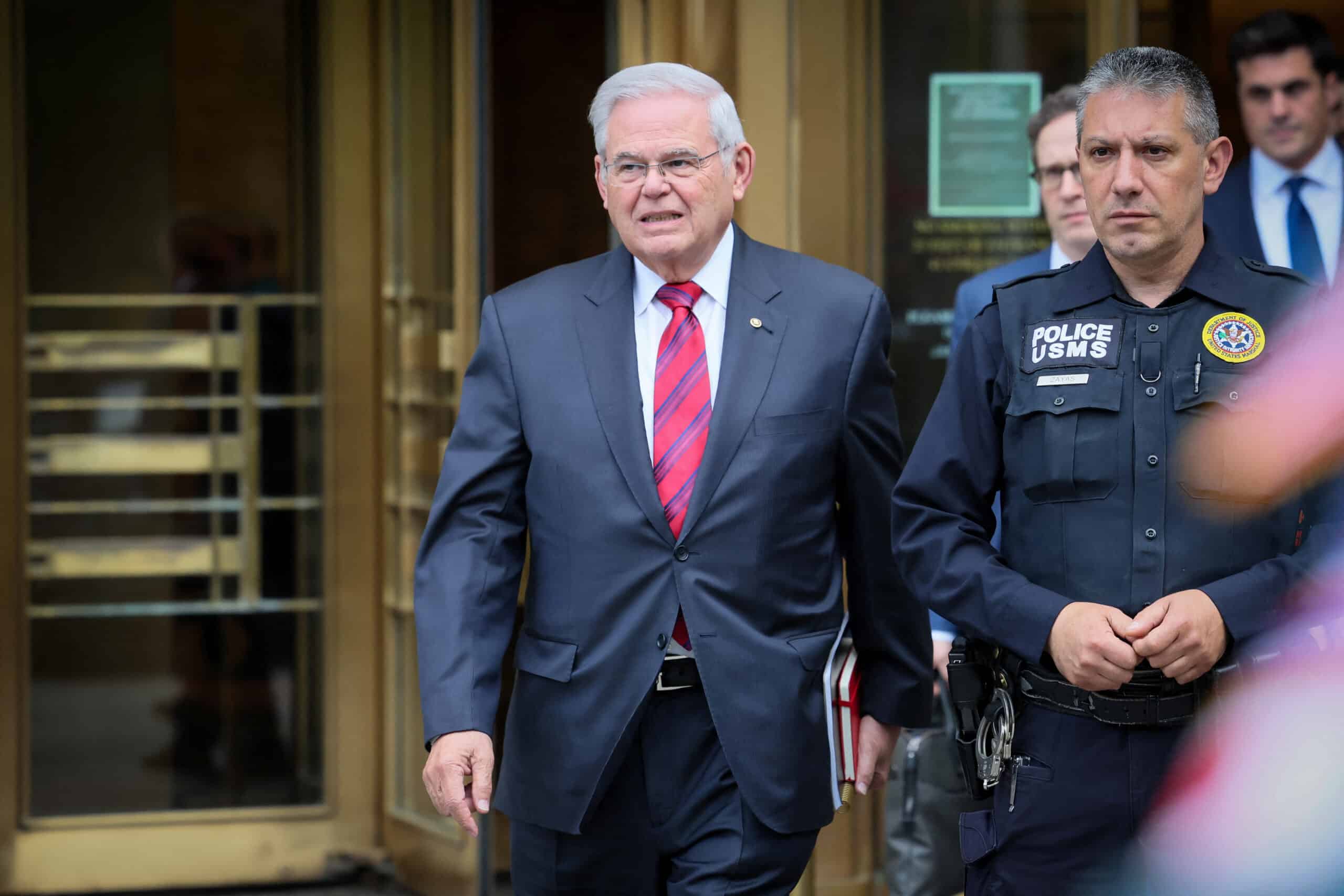
High Stakes in Senator Menendez’s Corruption Trial
In a pivotal moment for U.S. politics, the corruption trial of Senator Robert Menendez commenced with jury selection in Manhattan federal court. The New Jersey Democrat, alongside businessmen Wael Hana and Fred Daibes, faces a litany of charges including bribery and fraud. Nadine Menendez, the senator’s wife, also charged, will face a separate trial.
As the proceedings began, U.S. District Judge Sidney Stein excused numerous potential jurors, anticipating a trial that could extend into June. The courtroom saw Menendez engaging minimally, his attention occasionally shifting between documents and quiet discussions with his legal team.
The accusations are severe, with prosecutors alleging the acceptance of substantial bribes—ranging from cash to gold bars and luxury vehicles—in return for political favors to foreign governments. The prosecution’s narrative details Menendez’s involvement in aiding arms sales for Egypt and securing business monopolies for his co-defendants.
With the discovery of hidden cash in the senator’s residence and a cooperating defendant, the case against Menendez appears formidable. However, the defense suggests an alternative narrative, one where personal history and psychological factors explain the presence of cash in the senator’s home.
The implications of this trial extend far beyond the courtroom. Menendez’s political career hangs in the balance, with reelection on the horizon and his role in a narrowly divided Senate at stake. His refusal to resign despite pressure underscores the trial’s significance for both his future and the broader political landscape.
As the trial progresses, all eyes will be on how these allegations unfold and what they could mean for one of America’s most influential legislative bodies.