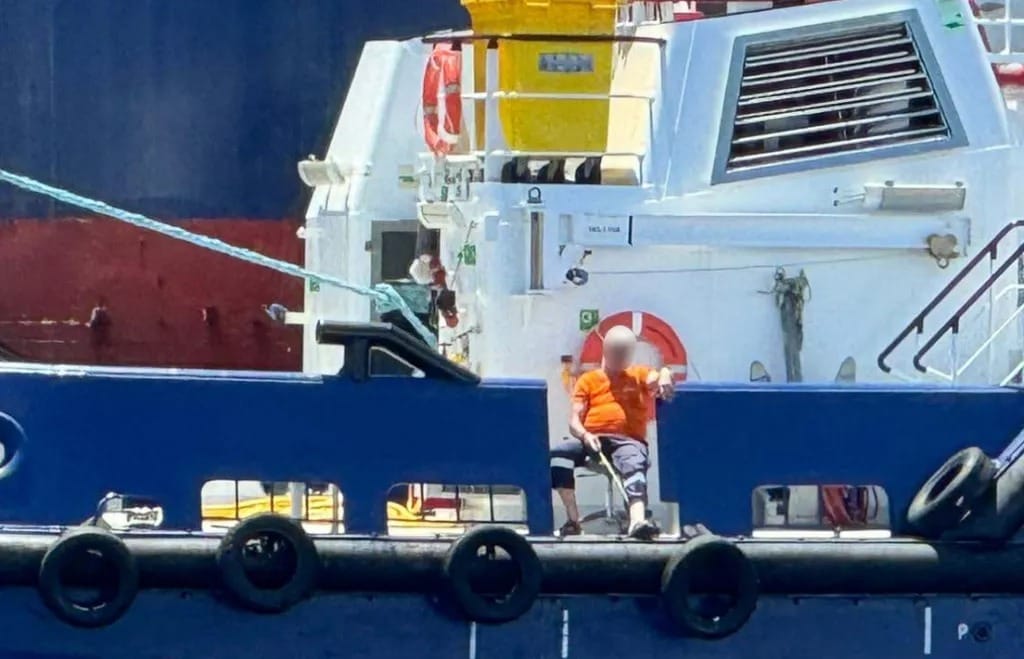
Concerns Over Safety Practices During Fuel Unloading at Cape Gata
In a startling revelation, photographic evidence has surfaced showing a crew member on a tugboat engaged in a precarious situation during a critical operation. The tugboat, positioned alongside a vessel at Cape Gata, was there to ensure safety as jet fuel was being unloaded for RAF Akrotiri. However, the crew member was not performing his duties with the required vigilance. Instead, he was spotted leisurely fishing and, more alarmingly, smoking a cigar.
This poses a risk of the highly flammable material igniting at any moment, potentially leading to a fire or explosion with severe consequences. The presence of jet fuel, a substance known for its volatility, demands strict adherence to safety protocols. The act of smoking in such an environment not only contravenes basic safety measures but also disregards the potential danger posed to the crew, the vessel, and the surrounding area.
Experts in hazardous materials handling emphasize that even a tiny spark or the vapours emitted by jet fuel can form explosive mixtures in the air. The unloading process is a critical time when vigilance must be at its highest to prevent any such occurrences. The crew’s responsibility is to monitor and manage any risks, ensuring that safety is paramount.
The incident raises serious questions about the safety culture within maritime operations, especially when dealing with dangerous goods. It serves as a stark reminder that tragedy can strike from a mere moment of negligence. The maritime community and regulatory bodies may need to re-evaluate and reinforce the importance of safety training and compliance to prevent any future incidents that could have catastrophic outcomes.
As the situation is being investigated, it stands as a cautionary tale for all involved in similar operations. The industry’s response will be closely monitored to ensure that such lapses in safety are addressed promptly and effectively.