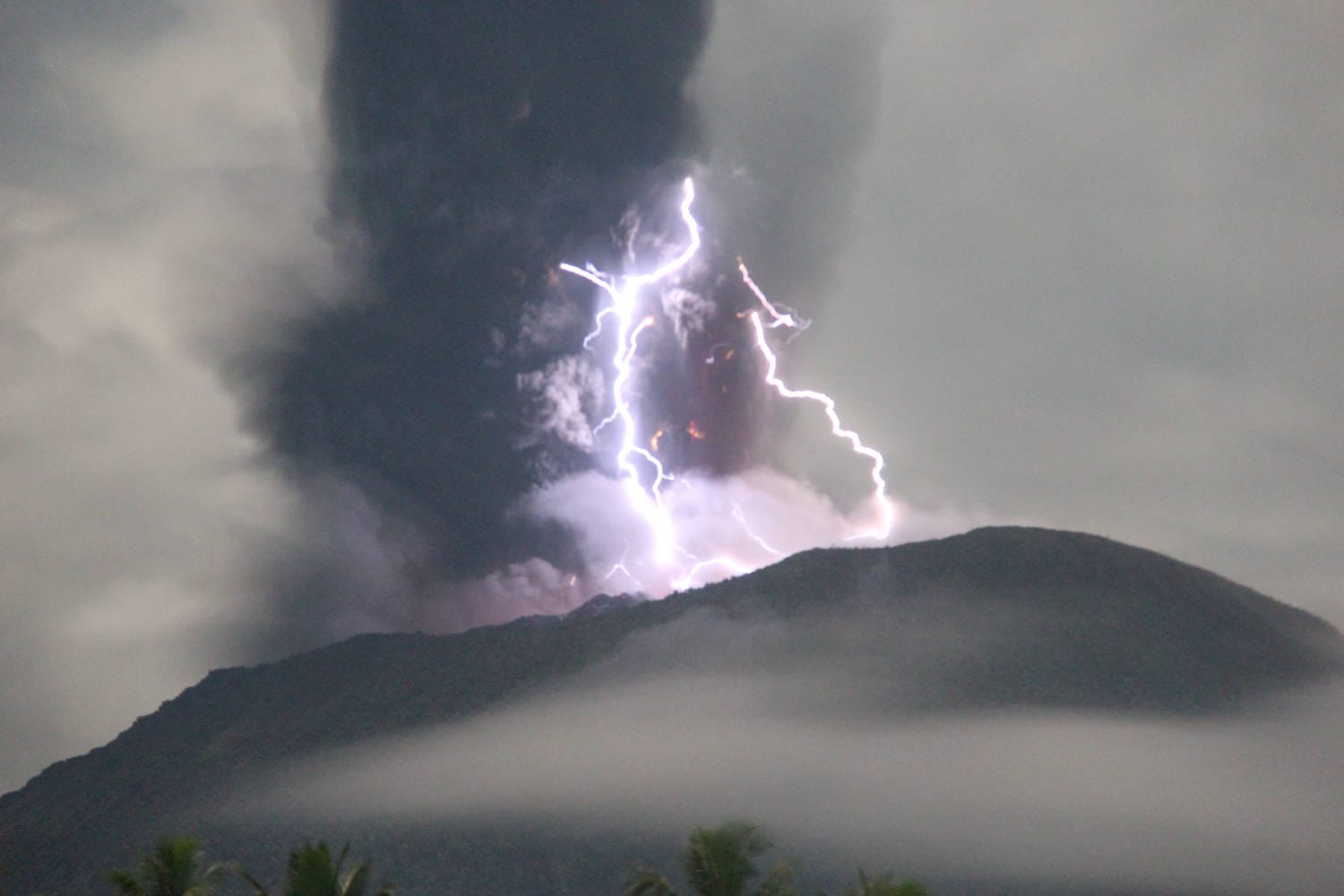
Volcanic Eruption Triggers Evacuation on Halmahera Island
In a dramatic display of nature’s power, Mt. Ibu, a volcano on the remote Indonesian island of Halmahera, erupted on Saturday evening, sending a 4 km high ash cloud into the sky. The event was accompanied by an electrifying natural phenomenon as streaks of purple lightning were observed flashing around the volcano’s crater.
The Indonesian volcanology agency has been closely monitoring the situation and reported the spectacular eruption, which prompted an immediate response from local authorities. A joint team, including police, military, and search and rescue officials, was swiftly organized to aid in the evacuation efforts. Abdul Muhari, a spokesperson from the disaster mitigation agency, confirmed that residents from seven nearby villages were evacuated to ensure their safety.
Images released by the disaster agency captured poignant moments of the evacuation process, showing authorities assisting the elderly and transporting other residents to emergency shelters using pick-up trucks. Although the exact number of evacuees has not been disclosed, officials have advised that a seven-km radius around the volcano be vacated as a precautionary measure.
In light of recent activities, Indonesia’s volcanology agency has raised the alert level for Mt. Ibu to its highest status. This follows multiple eruptions earlier in the month and comes amid a series of volcanic activities across Indonesia, which is part of the seismically active Pacific “Ring of Fire” and home to 127 active volcanoes.
Other regions in Indonesia have also faced natural disasters linked to volcanic activities. Notably, flash floods and cold lava flows from Mount Marapi in West Sumatra province resulted in over 60 fatalities after heavy rains struck on May 11. Meanwhile, North Sulawesi’s Ruang volcano has also erupted recently, causing the evacuation of more than 12,000 people from an adjacent island due to the outpouring of incandescent lava.
The series of natural events underscores the volatility of Indonesia’s landscape and the importance of swift emergency responses to protect communities living in proximity to active volcanoes.