Revisiting the Past: New Evidence on Early Human Settlement in Cyprus
In a groundbreaking study that is reshaping our understanding of early human migration, Professor Corey Bradshaw of Flinders University and his team have presented compelling evidence that suggests a much earlier human presence on the Mediterranean island of Cyprus. This research, published in the esteemed
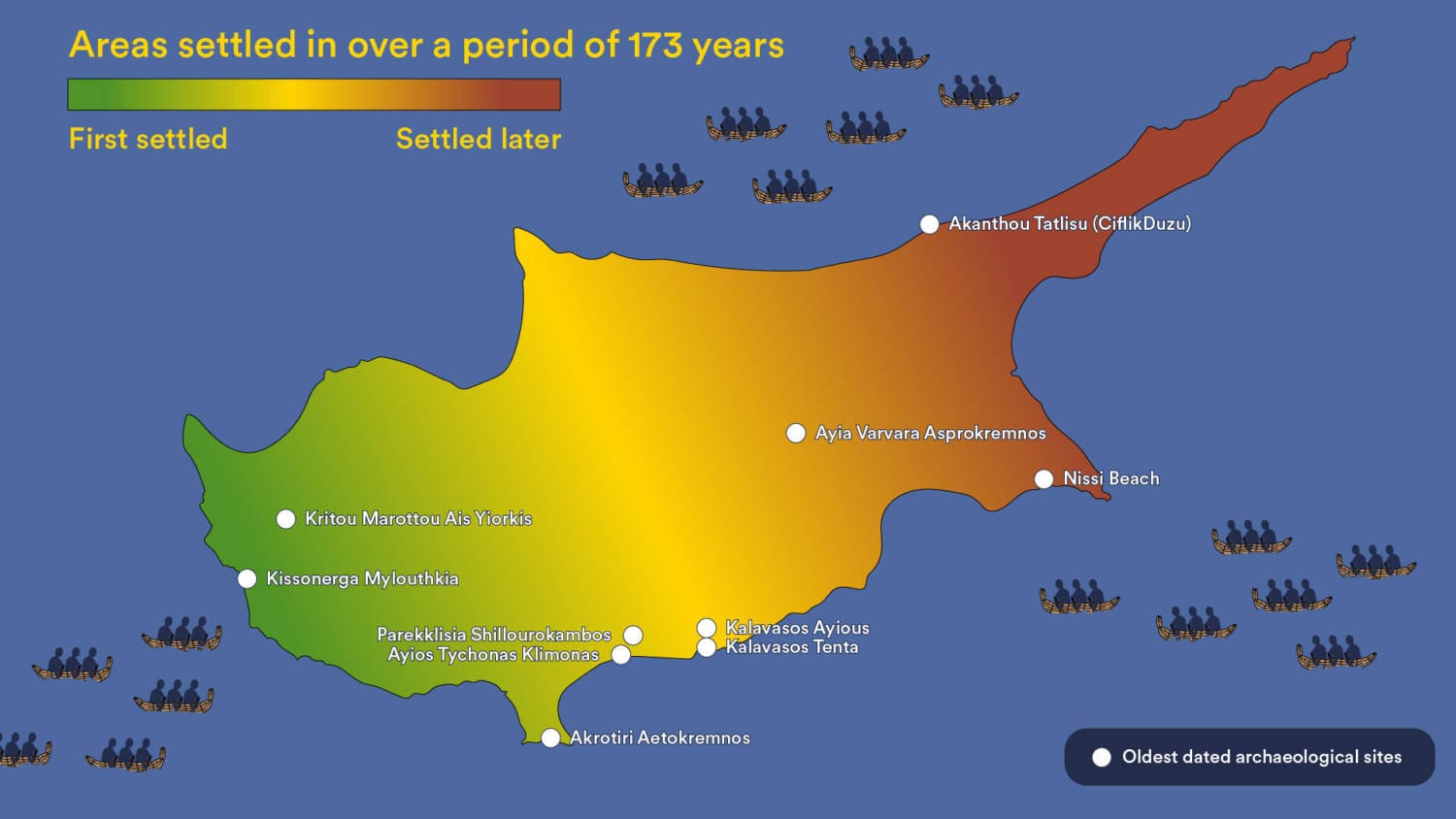
The researchers combined a variety of methods, including archaeological data, climate modelling, and demographic simulations, to paint a new picture of human history. Their analysis of 10 key archaeological sites across Cyprus indicates that hunter-gatherers may have settled the island between 14,257 and 13,182 years ago. This period of rapid settlement was likely aided by favorable climatic conditions such as rising temperatures and increased precipitation, which in turn led to more abundant environmental resources.
Demographic modelling suggests that large groups, possibly numbering in the hundreds or thousands, made their way to Cyprus in two to three waves over the course of a century. Professor Bradshaw interprets this as evidence of “organized planning and the use of advanced watercraft,” indicating a level of sophistication in these early societies that was previously underestimated.
Dr Theodora Moutsiou, a contributor to the study, points out that these findings challenge the notion that Mediterranean islands were seen as undesirable by Paleolithic peoples. Instead, Cyprus—and potentially other islands—would have been seen as attractive destinations. Dr Christian Reepmeyer adds that prior interpretations were based on incomplete archaeological records, but with more evidence and advanced modelling techniques, our understanding is evolving.
The study suggests that hunter-gatherers settled Cyprus much earlier than previously thought, prompting a reevaluation of early human migration patterns in the Mediterranean. As Professor Bradshaw notes, this new research necessitates revisiting early settlement dates and testing their validity using new technologies and field methods. The implications extend beyond Cyprus, potentially rewriting parts of our prehistoric narrative across all Mediterranean islands.