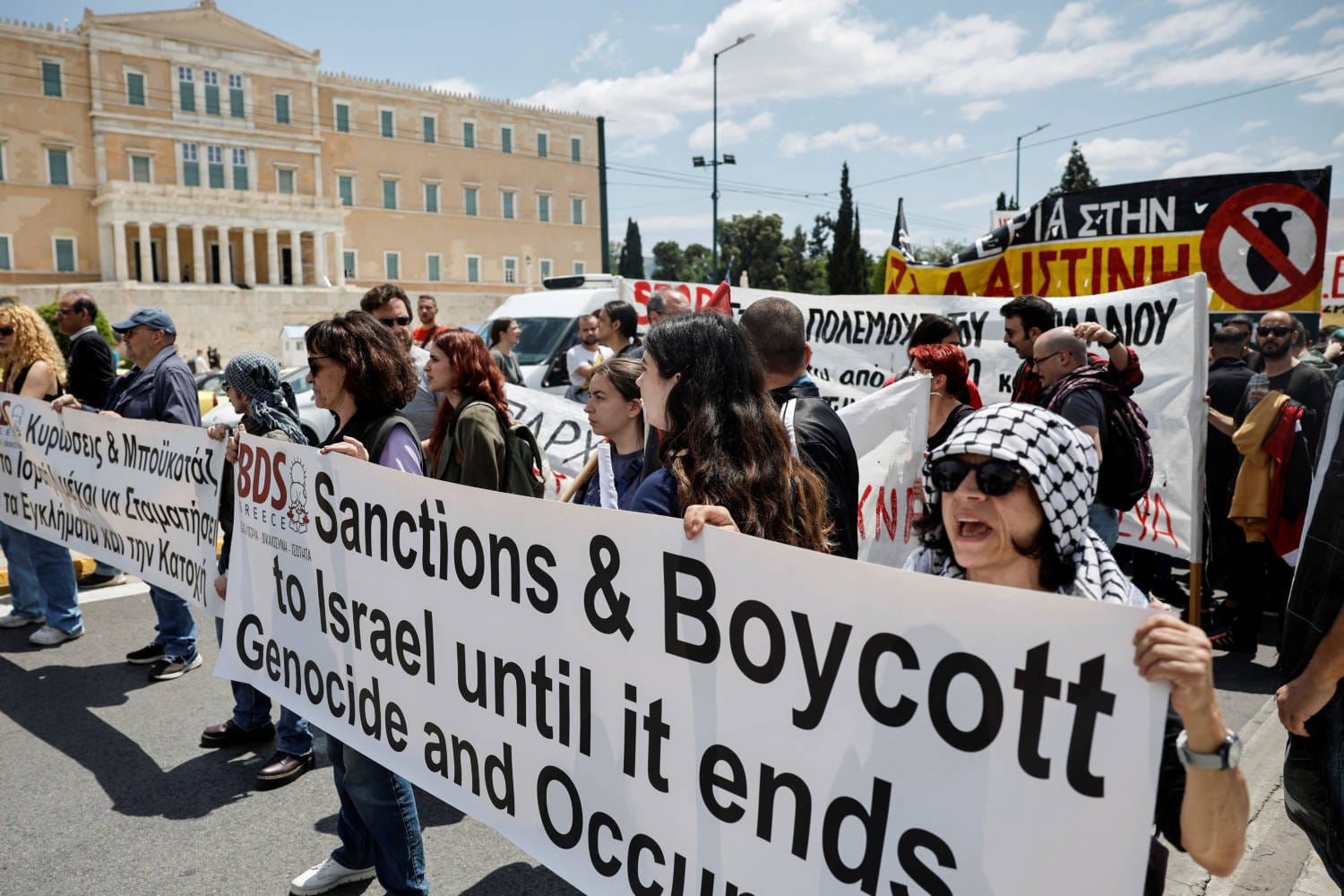
Deportation Orders Issued for Foreign Protesters in Greece
In a recent turn of events, nine protesters from Germany, Britain, France, Italy, and Spain are facing deportation from Greece following their arrest at a pro-Palestinian demonstration at the University of Athens School of Law. The group was part of a larger contingent of 28 individuals who were detained by police on charges that included disrupting the operation of a public entity and assisting in damaging foreign property.
The evidence presented against the protesters comprised various items such as leaflets, Palestinian flags, smoke flares, gas masks, helmets, paint cans, and banner poles. Additionally, a statement calling for others to join the protest was found uploaded on a website in both Greek and English. Despite these findings, the protesters have maintained their innocence.
While the Greek nationals involved have been released pending their trial on May 28, the foreign protesters have remained in custody. Lawyers for the non-Greek defendants have indicated that deportation orders have been issued against their clients, which could potentially bar them from attending their own trial. The lawyers, including Ioanna Sioupouli and Anny Paparoussou, have revealed plans to appeal the decision. Vassilis Papadopoulos, representing one of the detainees, has labeled the deportation decision as “arbitrary and illegal”.
The incident has drawn attention to the ongoing pro-Palestinian demonstrations in Greece, which have been a recurring event since the conflict between Israel and Hamas escalated in Gaza last October. It also highlights the controversial repeal of Greece’s Academic Sanctuary Law in 2019, which had previously prevented police from entering university premises. The law’s abolition has been met with criticism from those who view it as a suppression of democratic freedoms.
As the situation unfolds, the international community watches closely to see how Greece will balance its legal proceedings with respect to foreign nationals’ rights to protest and the country’s stance on public order.