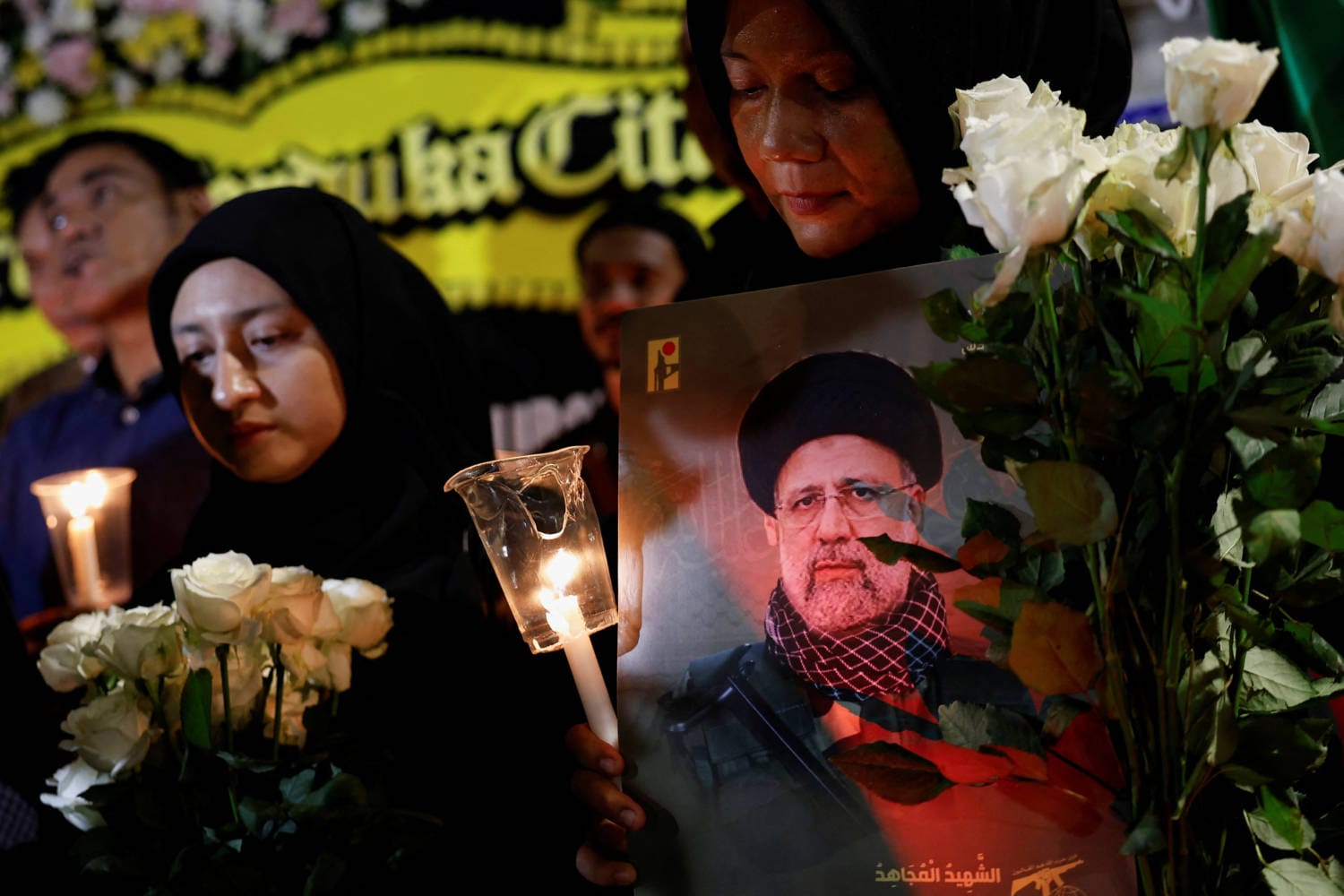
A Subdued National Mourning for Iran’s President Raisi
Despite prayers and mourning, most shops remained open in Iran as the nation entered a five-day period of mourning for President Ebrahim Raisi, who perished in a tragic helicopter crash alongside Foreign Minister Hossein Amir Abdollahian. The response from the Iranian public has been notably subdued, contrasting with the intense expressions of grief seen in the past for other senior figures.
While some loyalists gathered to pay their respects, the streets did not reflect the same level of disruption typically observed during periods of national mourning. The government’s approach to maintaining normalcy was evident, with little effort to halt daily activities.
The reaction to Raisi’s death has been mixed, with some Iranians expressing relief rather than sorrow. Laila, a young student from Tehran, shared her indifference towards the president’s passing, citing his role in the crackdown on women’s rights. Yet, she expressed a somber outlook on the future, doubting any significant change in the regime’s approach.
Iran has been grappling with widespread demonstrations and civil unrest, particularly following the death of a young woman in police custody, which ignited protests against the country’s strict dress codes. This has only widened the chasm between the governing clerical establishment and the general populace.
Supporters like Mohammad Hossein Zarrabi, a Basij militia member, praised Raisi’s work ethic and vowed to uphold his legacy. However, such sentiments were not universally shared, and the emotional outpouring that marked the death of figures like Qasem Soleimani was absent.
Raisi’s legacy is controversial, with his involvement in mass executions during the 1980s making him a divisive figure. While some online commenters celebrated his death as justice for past atrocities, others mourned him as a martyr.
Many Iranians remain skeptical about any potential shift in governance following Raisi’s death, expecting continuity in hardline policies. Reza, a shopkeeper from Yazd, voiced a common sentiment among citizens more concerned with pressing economic and social issues than political changes.
As Iran navigates through this period of mourning, the nation’s response reflects its complex political and social landscape, marked by a blend of grief, indifference, and anticipation for what lies ahead.