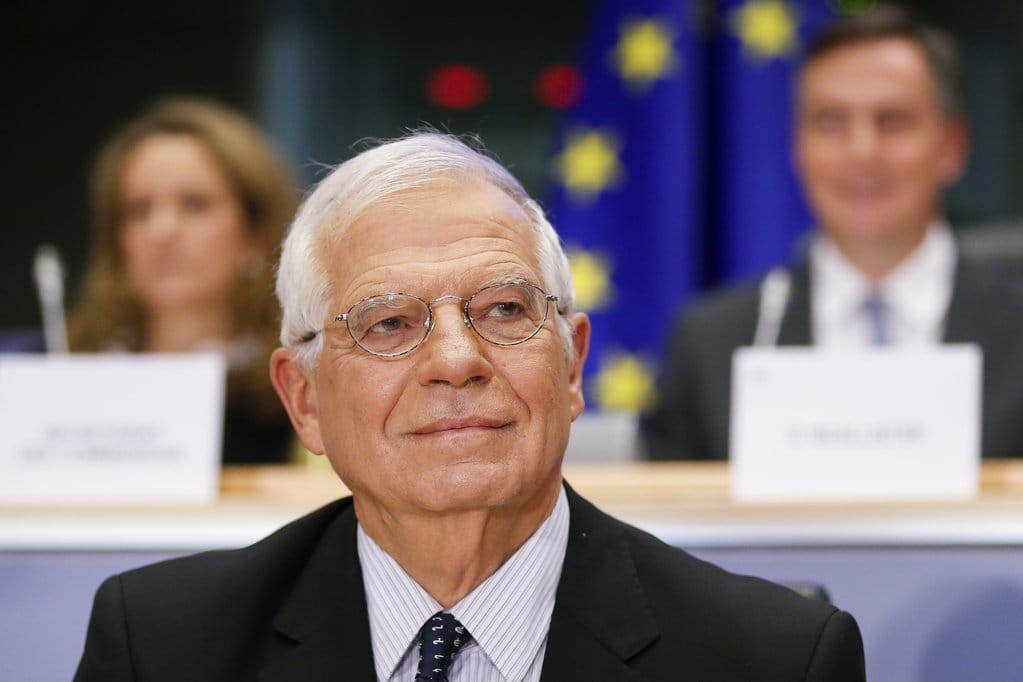
European Union foreign policy chief Josep Borrell has called for an end to what he describes as attempts by some European countries to intimidate International Criminal Court judges over a contentious case involving Israeli leaders. Speaking to Spanish broadcaster TVE, Borrell emphasized the need for respect towards the court’s proceedings and urged all parties, including the Israeli government, to refrain from influencing the judicial process.
Arrest Warrants Filed
ICC chief prosecutor Karim Khan announced on Monday that he had filed for arrest warrants against Israel’s Prime Minister Benjamin Netanyahu and Defence Minister Yoav Gallant, as well as three Hamas leaders. The charges against the Israeli leaders include crimes such as extermination, using hunger as a weapon, and intentionally attacking civilians. The Hamas leaders face accusations of crimes including extermination, hostage-taking, and sexual violence.
“The prosecutor has done nothing more than make an accusation and the court will decide,” Borrell stated. “In the meantime, I ask everyone, starting with the Israeli government and some European governments, not to intimidate the judges.”
Israel has vehemently denied committing war crimes in Gaza, asserting that the ICC lacks jurisdiction in the region. The Israeli government has called on other countries to repudiate what it considers a politically motivated rogue court. Hamas has also rejected the accusations against its leaders.
International Reactions
The ICC prosecutor’s decision to seek arrest warrants has sparked significant international controversy. Several countries, including the United States—Israel’s closest ally—have denounced the move. Hungary described the request for arrest warrants as a “political decision” that discredited the court.
Meanwhile, the International Court of Justice, a separate entity based in The Hague, was expected to rule on a request from South Africa to order Israel to halt its offensive in Rafah, a city in southern Gaza.
Political Isolation and Recognition of Palestinian State
In a move that further isolates Israel politically, Spain, Norway, and Ireland have announced their recognition of an independent Palestinian state. Israel contends that this recognition rewards Hamas for its October 7 attacks on Israeli territory and could strengthen the militant group. However, Borrell dismissed this criticism.
“When it is said that this strengthens Hamas, I see it the other way round because the Palestinian world is divided between an authority that we recognise, that we fund, that we engage with… and a terrorist organisation that we regard as such,” he said.
Borrell also mentioned that other European countries are considering recognizing a Palestinian state but did not provide further details. He stressed that criticizing the Israeli government’s actions should not be equated with antisemitism.
“Every time someone takes the decision to support Palestinian state-building, something that everyone in Europe supports… Israel’s reaction is to turn it into an anti-Semitic attack,” Borrell concluded.