Multimillion-dollar homes line the Pacific Coast Highway, which can limit the amount of public access to certain beaches, April 13, 2002, in Malibu, California. (Getty Images / Bob Riha Jr. / Getty Images) With less reliance on gasoline and diesel vehicles, “California will be challenged to sustain its $2.5 trillion economy,” Caltrans wrote in a 2017 summary.
Price Futures Group senior market analyst Phil Flynn told FOX Business that “one of the best-kept secrets of many Washington and local politicians is the importance of gasoline taxes on the federal and local economy,” he said. If that’s taken away, states are going to find other ways to recoup the costs, said Flynn, who is also a FOX Business contributor.
Impact of Gas Prices and Road Charge
President Biden set his sights on achieving 50% of all new vehicle sales being electric by 2030 by, in part, lowering the cost of vehicles and increasing the EV charging infrastructure. Since Biden took office, electric vehicle sales have more than quadrupled, with more than 4 and a half million EVs on the road, the Biden administration said in January. But even now, as the percentage of electric cars isn’t that high, states are “already feeling the pinch,” Flynn said.
For instance, Flynn said California is obviously taking the biggest hit because it has the most registered vehicles. Even though it’s a small percentage, it’s really hurting California, and it’s part of the reason why the state saw “their budget surplus magically disappear,” he said.
An oil pumpjack is shown in Long Beach, California. (Mario Tama / File / Getty Images) WILL BIDEN’S EV PUSH IMPACT PRESIDENTIAL ELECTION? AMERICANS WEIGH IN He argued that “when you have an administration that is working to replace the oil and gas industry in favor of an industry that needs handouts, you better find a way to replace the tax revenue that the oil and gas industry provide,” he continued. He also pointed out how much the U.S. oil industry “stimulates the U.S. economy.”
While Flynn is not particularly bothered by charging drivers per mile, he noted concerns about how it’s being tested. He said that having a GPS tracking system on cars “raises some of the same concerns that we saw with privacy that we have had with social media companies and cellphone data.”
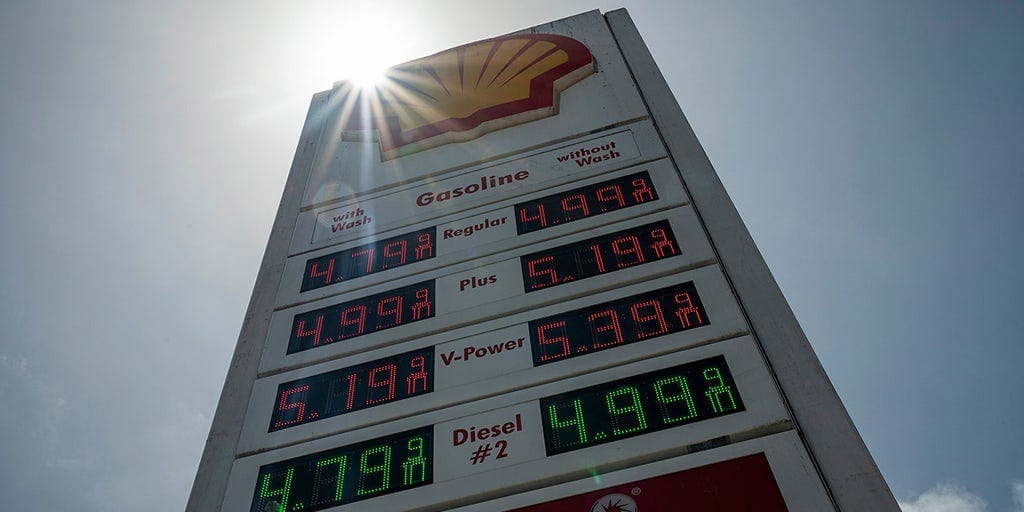
Gas prices are displayed in Los Angeles, California. (Eric Thayer / Bloomberg / File / Getty Images) GET FOX BUSINESS ON THE GO BY CLICKING HERE However, the California State Transportation Agency told FOX Business that there are security protocols in place aimed at protecting personal identifying information: “Participants choose their preferred reporting method and no one is being tracked. The GPS data is anonymized, and personal information collected during the pilot will be destroyed 30 days after the pilot concludes.”
That said, the administration is not proposing any action or changes at this point. If this is adopted, a road charge program would still require extensive public engagement and statutory authority, which is not currently being pursued.