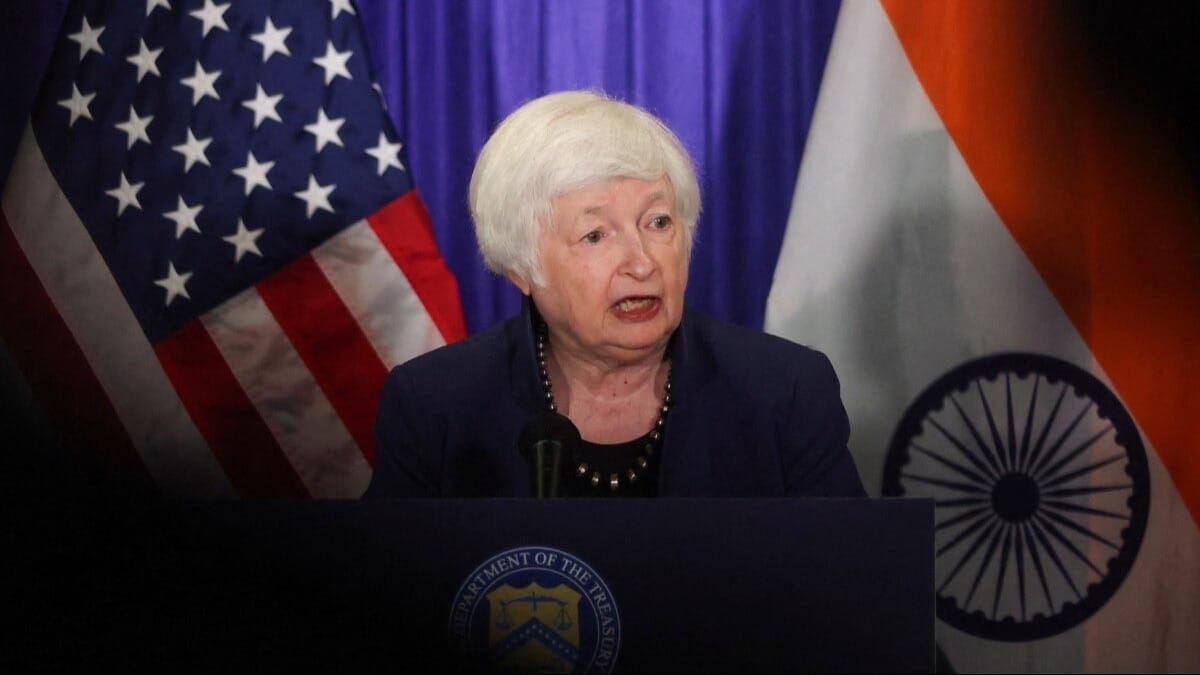
US Treasury Secretary Janet Yellen is making a concerted effort to salvage a crucial part of the global corporate tax deal, specifically targeting highly profitable multinational firms. However, the path forward is fraught with challenges, as India remains unresponsive on issues pivotal to US interests. Speaking to Reuters during a G7 finance leaders meeting in Italy, Yellen highlighted that China has also been conspicuously absent from the ongoing negotiations to finalize “Pillar 1” of the OECD corporate tax deal, initially agreed upon in principle in 2021 by 140 countries.
“We are actively engaged in this negotiation,” Yellen stated, emphasizing the urgency of meeting an end-June deadline for the deal. “We’re committed to doing everything we possibly can to make it work.”
Pillar 1 Negotiations: A Rocky Road
Italian Finance Minister Giancarlo Giorgetti expressed skepticism about the success of the Pillar 1 negotiations, citing objections from the US, India, and China. The primary aim of these negotiations is to reallocate taxing rights on US-based digital giants, enabling approximately $200 billion of corporate profits to be taxed in the countries where these companies operate.
Meanwhile, a second pillar of the tax deal, which involves a 15 percent global minimum tax on corporate profits, is being implemented by many countries. However, the US Congress has yet to ratify it.
Yellen pointed out two “red line” issues for the US in these talks: transfer pricing and the “Amount B” system designed to simplify transfer pricing calculations. While most countries align with the US stance on these matters, India remains a significant holdout. “We have a problem with India. India will not engage with us,” Yellen noted.
Potential Fallout and Trade Tensions
The collapse of the Pillar 1 negotiations could lead to the resurgence of digital services taxes in some countries, potentially reigniting trade tensions. Prior to the initial 2021 deal, US trade authorities had threatened 25 percent tariffs on over $2 billion worth of imports from countries including Italy, Austria, Britain, France, Spain, and Turkey. These tariffs, covering products from cosmetics to handbags, were put on hold after these nations agreed to suspend their digital taxes while details of the arrangement were ironed out.
Italy is keen to negotiate an agreement with Washington that would prevent these tariffs, which are temporarily frozen until June, while still maintaining its levy. According to Reuters, Italy aims to strike a balance between safeguarding its fiscal interests and avoiding potential trade conflicts with the US.