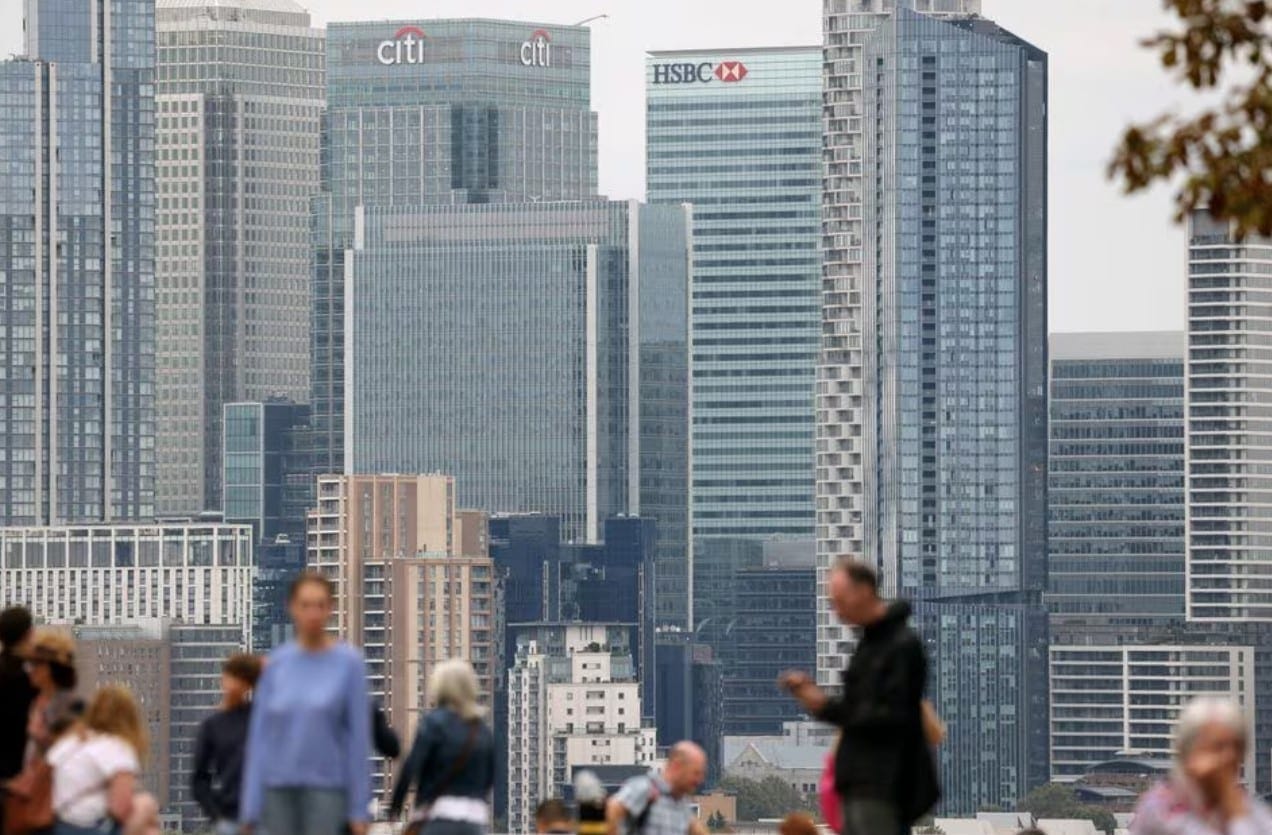
As Britain prepares for a general election in early July, and polls indicate the opposition Labour party could return to power for the first time in nearly 15 years, market analysts are drawing lessons from recent history to work out what to expect. Prime Minister Rishi Sunak’s decision on Wednesday to call a summer election took political pundits, lawmakers, and investors by surprise, giving the pound a modest boost, but weighing on utilities as debate about their ownership can end up being a battleground on the campaign trail.
Keir Starmer’s Labour Party has held a roughly 20-point lead in opinion polls since Sunak took power in late 2022 following the scandal-ridden premiership of Boris Johnson and the upheaval of Liz Truss’s 49-day tenure that wreaked havoc in markets – something both party leaders will be at pains to avoid.
UK government debt levels cause concern among some investors, while in the stock market, banks, utilities, homebuilders and landlords, defence and energy shares will be in focus. The performance of the pound and the London stock market have also varied in the past, depending on who wins.
UK Equities
Citi has crunched the numbers and found that UK equities – looking at the FTSE 100 (.FTSE) and the mid-cap FTSE 250 (.FTMC) – both tend to be quite flat in the six months after a national election. The mid-cap 250 index, which is more exposed to the domestic British economy, has tended to outperform the more globally focused blue-chip index.
During recent government terms as a whole, the FTSE 250 staged its best performance during the Conservative/Liberal Democrat coalition from 2010 to 2015, with a gain of 75 per cent, followed by its performance during the Labour parliament that ran from 1997 to 2001, with a rise of 50 per cent, according to LSEG data.
The FTSE 100, meanwhile, has tended to perform worse under a Labour government, with an average gain of just 0.3 per cent, compared with the average 32 per cent rise in the FTSE 250 during Labour terms since 1997. Its strongest showing, like the 250, was under the Con/LibDem coalition, when it rose 32 per cent, followed by its performance under the current Conservative government, with a rise of nearly 15 per cent since December 2019.
Sound as a Pound
The pound always gets twitchy at election time. The currency is the lightning rod for international investor opinion about the UK and whatever key policies the expected next government is promising.
Sunak’s decision to call the election on July 4 came as a surprise but the political rumour mill and the sterling volatility options market began whirring first thing Wednesday morning as key ministers started cancelling appearances and it became known that foreign minister and former Prime Minister, David Cameron, was suddenly rushing back from an overseas trip.
With opposition party Labour enjoying a commanding lead in the polls, traders don’t expect too big a spike in volatility from here, but any policy bombshells or sudden wrong moves could trigger some action.
Sectors Under Scrutiny
A few sectors will come under close scrutiny. The timing of the election looks to have almost certainly delayed the sale of the government’s stake in lender Natwest Group (NWG.L) to the public and could snarl up other deals in the pipeline.
Other key sectors to watch will be housebuilders, as parties jostle for a building bonanza, as well as the water sector as the hot election topic of relentless amounts of raw sewage being dumped into UK rivers and seas means the threat of renationalization of some of the worst-performing and most cash-strapped firms looms large.
Spend… or Don’t
Bond market investors will look very closely at the two parties’ spending plans – especially Labour’s. UK government bonds, known as gilts, crashed in 2022 when then-PM Truss unveiled plans for large tax cuts that would have caused an already large budget deficit to dramatically widen.
The government needs to borrow around 265 billion pounds ($337.27 billion) in international markets in the 2024/25 financial year in the second-largest year for bond sales on record. Bond market stability is paramount.
Investors say the similarities in the party’s economic plans and Labour’s commanding poll leads mean the focus will remain on inflation, Bank of England rate cuts and the US economy as the main drivers for fixed income assets.
Credit Default Swaps
Despite all the hand-wringing about empty government coffers and rising debt levels, the credit default swap markets – the place bond investors go to buy insurance against the type of turmoil caused by Truss’ disastrous 2022 mini-budget – actually now price the UK as if it had a higher credit rating than it currently does.
Five-year CDS on UK sovereign debt currently trade around 24 basis points, according to numbers from S&P Global Market Intelligence.