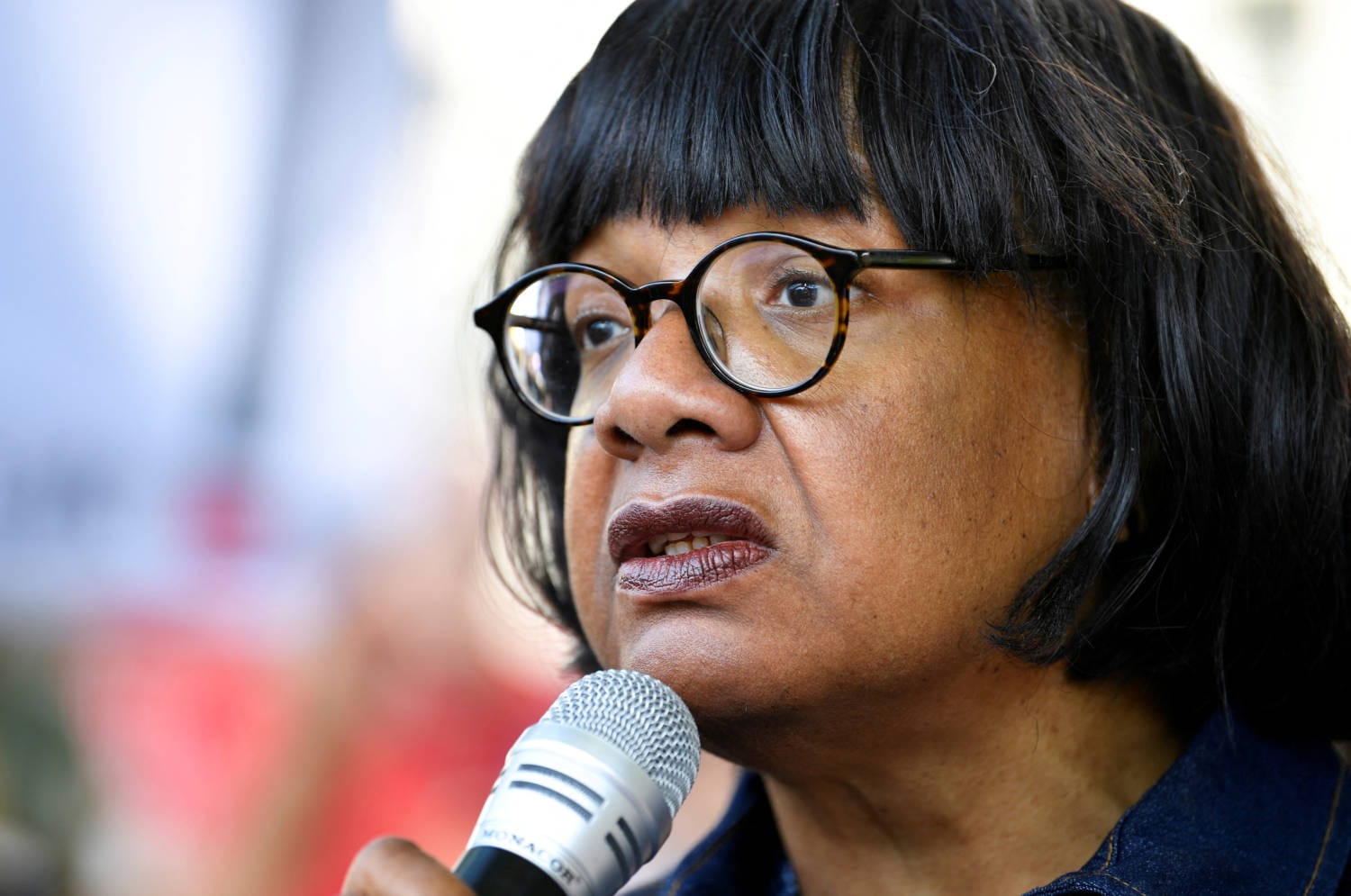
Britain’s first Black woman lawmaker, Diane Abbott, announced on Wednesday that she has been barred from running as a Labour candidate in the upcoming general election on July 4. This decision follows her suspension over a year ago due to comments she made about Jews and racism.
A Storied Political Career
Abbott, who was first elected to parliament for Labour in 1987, has been a prominent figure in British politics for decades. Known for her close alliance with former Labour leader Jeremy Corbyn and her position on the left wing of the party, Abbott has been a steadfast advocate for social justice and equality.
However, her career faced a significant setback last year when she sent a letter to the Observer newspaper. In the letter, she stated that the prejudice experienced by Jewish people was similar to, but not the same as, racism. “They undoubtedly experience prejudice. This is similar to racism and the two words are often used as if they are interchangeable,” she wrote. “It is true that many types of white people with points of difference, such as redheads, can experience this prejudice. But they are not all their lives subject to racism.”
The comments sparked controversy and led to her suspension from the Labour Party. Despite issuing an unreserved apology, Abbott faced significant backlash and was temporarily removed from her role.
Restoration and Restriction
In a recent development, Abbott told the BBC that she had been readmitted to the party, with the whip restored. “Although the whip has been restored, I am banned from standing as a Labour candidate,” she said. This means that while she is once again a member of the Labour Party, she will not be able to represent them in the forthcoming general election.
Abbott’s situation highlights ongoing tensions within the Labour Party regarding issues of race and prejudice. Her suspension and subsequent barring from candidacy have sparked debates about freedom of speech, accountability, and the complexities of addressing racism and prejudice within political discourse.
As Britain’s first Black woman lawmaker, Diane Abbott’s legacy is marked by both her groundbreaking achievements and the controversies that have surrounded her. Her exclusion from the upcoming election marks a significant moment in her political journey, raising questions about the future direction of the Labour Party and its approach to sensitive social issues.