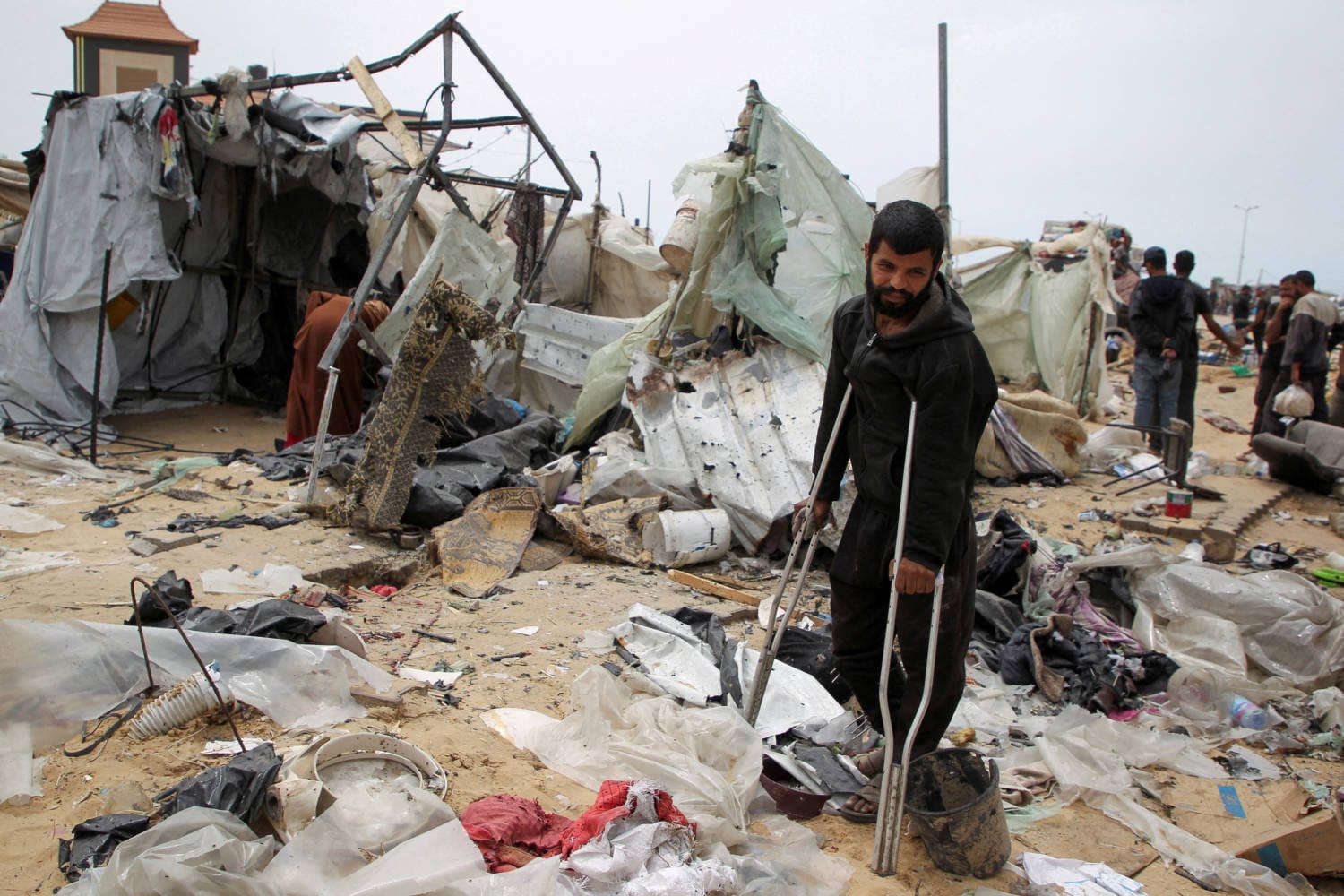
Israeli tanks continued to raid Rafah for a second day, defying the World Court’s order to end attacks on the city. The United States did not believe a major ground operation was underway, despite Israel’s incursion into Rafah. Washington reiterated its opposition to a major Israeli ground offensive but maintained that the current actions did not amount to such an operation.
On Wednesday, residents of Rafah reported that Israeli tanks had advanced into Tel Al-Sultan in western Rafah and Yibna near Shaboura in the center before retreating towards a buffer zone on the border with Egypt. This contrasted with offensives seen elsewhere. Prime Minister Benjamin Netanyahu’s National Security Advisor, Tzachi Hanegbi, stated that Israel’s military controlled three-quarters of the buffer zone and aimed to control all of it to prevent Hamas from smuggling in weapons. He anticipated that fighting in Gaza would continue throughout 2024 at least, signaling Israel’s reluctance to heed international calls for a ceasefire.
Healthcare Crisis in Rafah and Northern Gaza
Gaza’s health ministry reported that several hospitals in areas where the army is operating had ceased functioning. Spokesperson Ashraf Al-Qidra called for immediate safe pathways for fuel, medical aid, and medical teams to Rafah and northern Gaza. “The Israeli occupation deliberately finished off the healthcare presence in Rafah and the north,” Qidra stated, adding that there was no help for those wounded there.
Around a million Palestinians who had taken shelter in Rafah from Israel’s offensives elsewhere have now fled after Israeli orders to evacuate, according to the U.N. agency for Palestinian refugees UNRWA. The Palestine Red Crescent Society (PRCS) evacuated its medical teams from its field hospital in the Al-Mawasi area due to “continued artillery and air bombardments” nearby.
In northern Gaza, tanks shelled several Gaza City neighborhoods, and forces pushed deeper into Jabalia, the largest of the enclave’s eight historic refugee camps. Residents reported large residential districts being destroyed. The armed wings of Hamas and Islamic Jihad claimed they confronted the invading forces with anti-tank rockets and mortar bombs, detonating previously planted explosive devices.
The Israeli military reported three soldiers killed and three others badly wounded in combat in southern Gaza. Palestinian health officials said several people were wounded by Israeli fire in eastern Rafah, and stores of aid were set ablaze. Residents described constant Israeli bombardment overnight destroying many homes in the area.
Internet and mobile signals went down in parts of both east and west amid heavy Israeli air and ground bombardment, according to the pro-Hamas Shehab news agency, residents, and other journalists. The Israeli military could not confirm these reports.
Israel delivered its latest ceasefire and hostage release proposal to Qatar for transmission to Hamas. However, there was no immediate response from Hamas, which has stated that talks are pointless unless Israel ends its offensive on Rafah.
More than 36,000 Palestinians have been killed in Israel’s Gaza offensive, according to the enclave’s health ministry. Israel launched its air and ground war after Hamas-led militants attacked southern Israeli communities on Oct. 7, killing around 1,200 people and seizing more than 250 hostages.
Malnutrition is widespread in Gaza as aid deliveries have slowed to a trickle. International aid agencies accuse Israel of blocking their distribution attempts, while Israel blames the agencies. In a further blow to aid efforts, part of a new aid pier put in place by the U.S. military off Gaza’s coast broke off due to bad weather, temporarily putting it out of operation.