Quoting Thucydides, “for the whole earth is the tomb of famous men,” President Nikos Christodoulides emphasized the profound significance of burying the remains of Greeks missing since the intercommunal strife in the 1960s and the 1974 invasion. He stated that repatriating these remains was “a matter of national pride for all Greeks.”
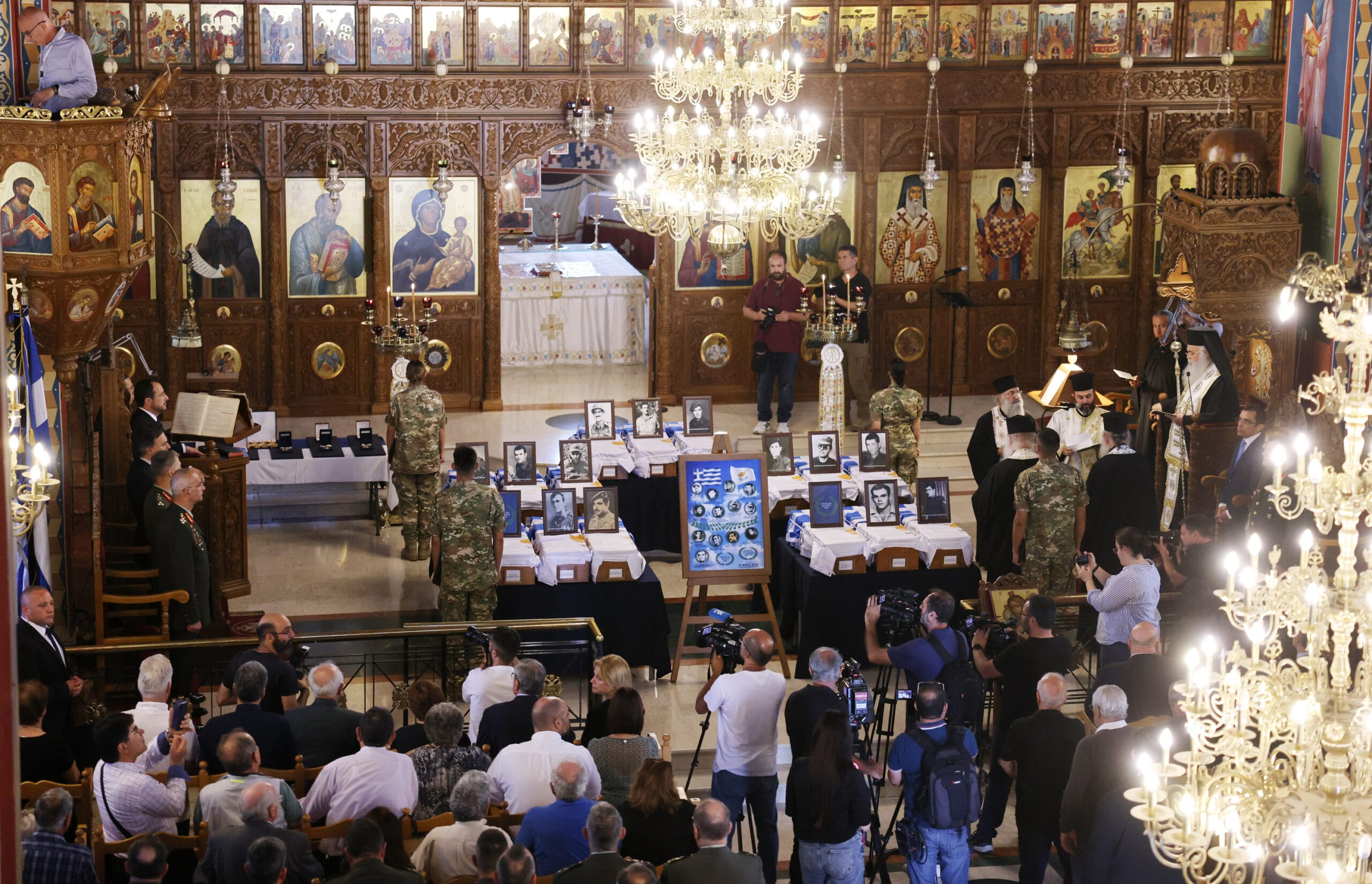
“The moments we are called upon as state and society to honour people who sacrificed their lives ‘for faith and country’ are shocking,” Christodoulides remarked at a solemn ceremony in Nicosia on Thursday. The event marked the handover of the remains of 15 Greeks for repatriation.
Humanitarian Efforts and National Pride
Christodoulides underscored that addressing the issue of the fallen and those still missing was a humanitarian priority for his government. He noted that repatriating the remains of Greeks was “the least we could do for all those who fought and died for our freedom.”
The ceremony took place at Makedonitissa tomb, a site dedicated to Greeks and Greek Cypriots who perished fighting for Cyprus. As remains are identified through DNA tests, they are handed over in groups to Greek authorities for repatriation. Families have the option to bury their loved ones at Makedonitissa.
Identification programmes are meticulously run by the government and the Committee on Missing Persons, ensuring that each set of remains is accurately identified and respectfully returned to their homeland.
This ongoing effort to locate and repatriate the remains of Greeks is not just a bureaucratic process; it is a deeply emotional and symbolic act that resonates with the collective memory and national pride of Greece. It serves as a poignant reminder of the sacrifices made for freedom and the enduring bond between Greece and Cyprus.