“`html
Regular Training or Strategic Posturing?
Russian President Vladimir Putin has emphasized the routine nature of a planned military exercise that will include the deployment of tactical nuclear weapons in southern Russia and Belarus. This exercise was announced in response to perceived threats from France, Britain, and the United States, with preparations already underway.
Putin’s comments, reported by state news agency TASS, sought to downplay the significance of the drills, describing them as “planned work” and “training.” The Russian defence ministry has linked the planned exercise to what it calls “provocative statements and threats by certain Western officials against the Russian Federation.”
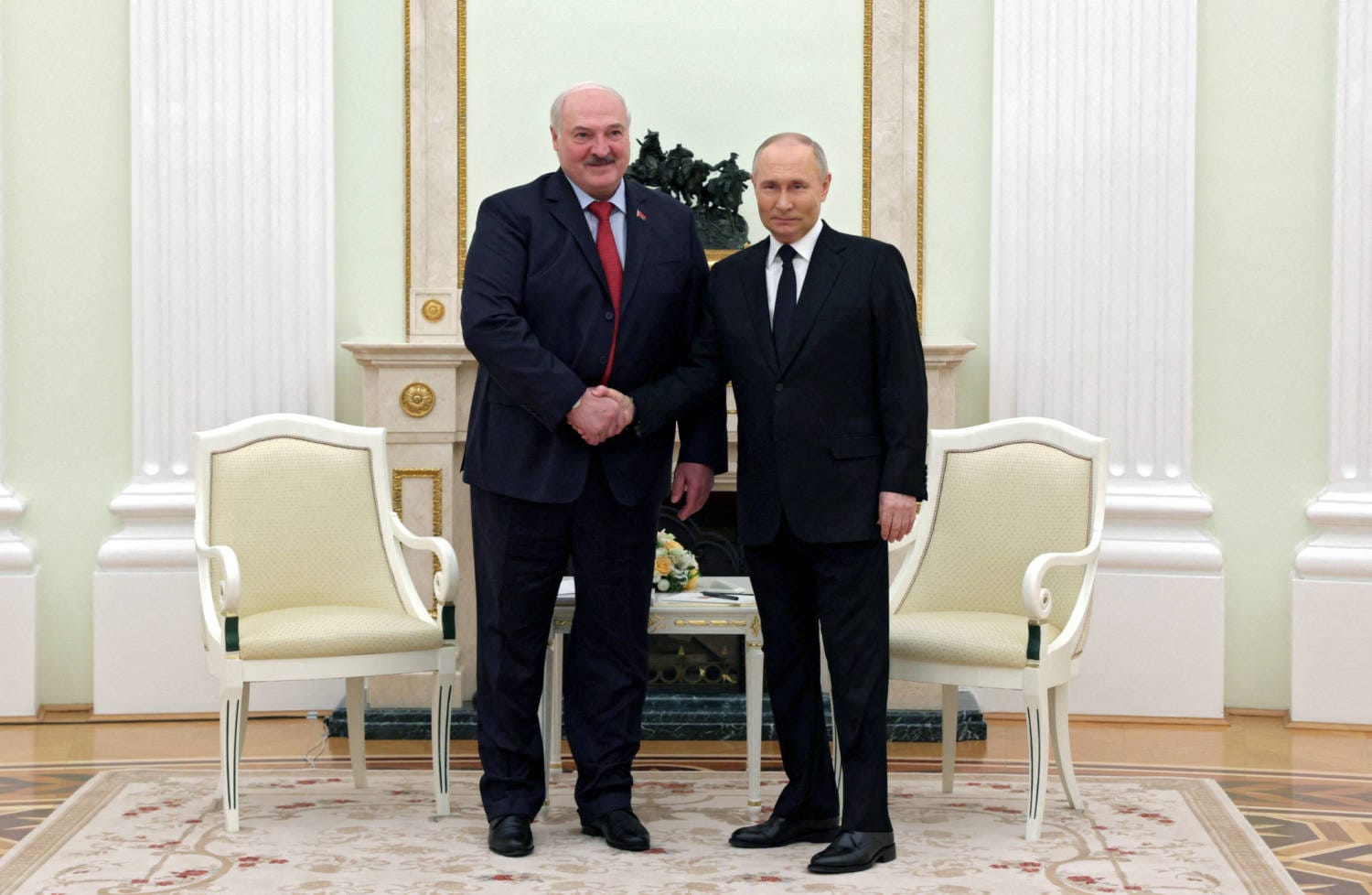
Last year, Putin disclosed that Russia had moved some tactical nuclear weapons to Belarus, marking the first such transfer outside of Russia since the Soviet Union’s dissolution in 1991. He also mentioned that Belarus was invited to participate in one of the stages of the upcoming nuclear exercise.
Belarusian President Alexander Lukashenko confirmed that this would be the third joint training drill of its kind, with both nations’ general staffs already beginning preparations.
While Russia and the United States possess the majority of the world’s nuclear arsenal, there remains considerable uncertainty about the specifics of Russia’s non-strategic nuclear warheads and their deployment in Belarus. Experts point out that establishing the necessary infrastructure for such weapons typically requires time for storage, security, and barracks construction. Moreover, questions linger about the presence of Russia’s 12th Main Directorate, which controls these weapons, in Belarus.
The Pentagon recently stated it had not observed any changes in Russia’s strategic nuclear forces positioning, despite what it termed “irresponsible rhetoric” from Moscow. The last use of nuclear weapons in conflict was by the United States during World War II, and since then, no nation has employed them in warfare.
“`