The Winds of Change in South African Politics
As South Africa approaches its pivotal election on May 29, the political landscape is undergoing a seismic shift. The once unassailable African National Congress (ANC) is predicted to see its vote share plummet below the 50 percent mark for the first time since apartheid’s demise. This decline, however, has not given rise to new political parties with innovative visions. Instead, the familiar faces of established parties continue to present well-worn ideas.
The nation grapples with stark realities: a 32 percent official unemployment rate and over sixty percent of its population living in poverty. Despite being Africa’s most developed nation, according to the World Bank, South Africa also bears the burden of being its most unequal, with disparities still deeply entrenched along racial lines.
Efforts by the ANC to address land ownership disparities have seen an increase in black-owned farmland since apartheid. Yet, these initiatives have faltered, with a lack of capital and expertise leading to decreased productivity and employment on these lands.
The ANC’s recent history has been marred by corruption, most notably under former President Jacob Zuma’s tenure from 2009 to 2018. Zuma’s presidency was characterized by widespread ‘state capture,’ resulting in significant financial loss and institutional damage. Now, at 82, Zuma has founded a new party, uMkhonto we Sizwe, which is expected to draw significant Zulu support and further diminish the ANC’s standing in the upcoming election.
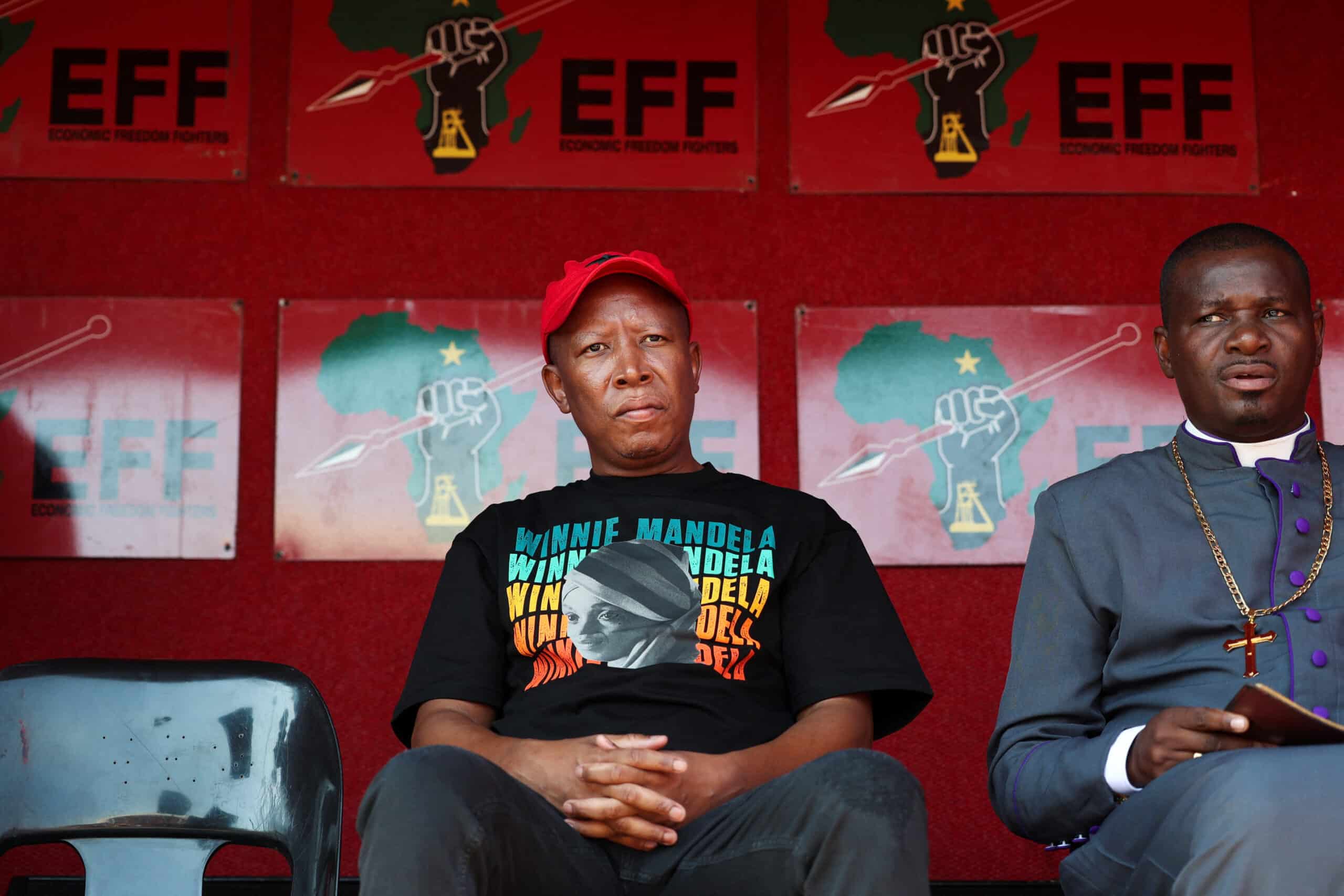
The Democratic Alliance (DA) and the Economic Freedom Fighters (EFF) are positioned as the main opposition parties, polling at 22 percent and 11.5 percent respectively. The DA remains a bastion for white voters and the middle class, while the EFF, under Julius Malema’s leadership, offers radical rhetoric without substantial electoral gain.
Malema’s strategy appears to be one of incremental power acquisition, potentially positioning the EFF as a coalition partner with the ANC. Despite his fiery language and revolutionary posturing, Malema’s personal lifestyle contrasts sharply with the disadvantaged masses he claims to represent.
Within the ANC, President Cyril Ramaphosa’s tenure has been challenged by entrenched local interests and recent allegations of corruption, casting doubt on prospects for internal reform.
Despite these challenges, it is premature to dismiss South Africa’s potential for recovery. The country possesses abundant resources and a relatively educated populace. The resilience of its people suggests that change is still within reach, and this election could mark a critical turning point for the nation.