Revolutionizing Healthcare: Insights from the First International Symposium on Digital Twins
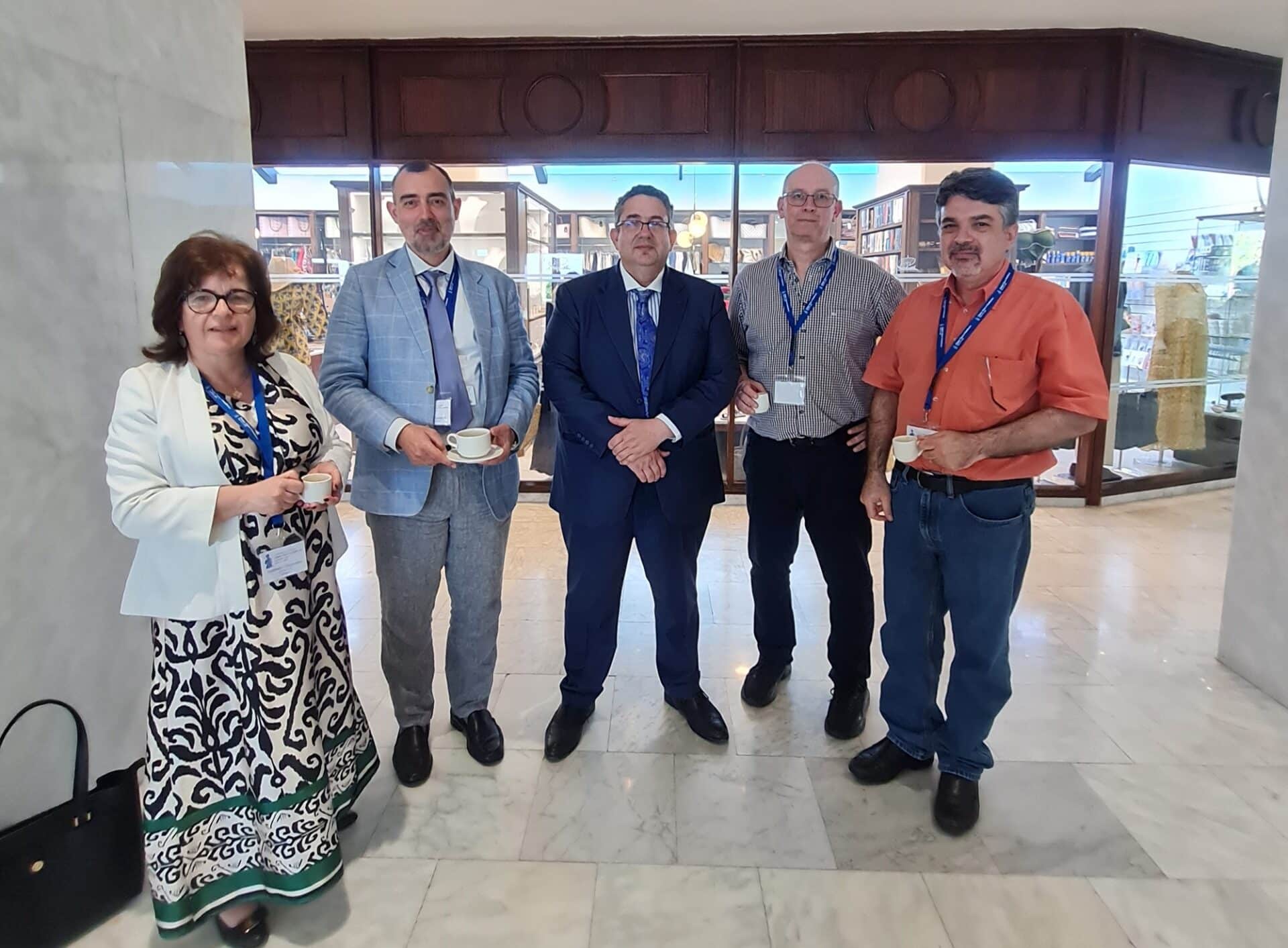
In a significant stride towards the future of medical health care, the University of Cyprus, in collaboration with CYENS, KOIOS, and EPOS-IASIS, hosted the inaugural International Symposium: Digital Twins 4 Healthcare. The event, held on May 16 and 17, brought together over 45 international researchers, including Chief Scientist Demetris Skourides, to explore the integration of digital twins in healthcare.
The symposium featured a strong representation from the Cyprus healthcare system, with Cypriot academics like Constantinos Dovrolis, Costas Pitris, and Antonis Kakas contributing to the vibrant discourse. They discussed the impact of research and technology on personalized and precision healthcare, a testament to the advancements within the health care system in Cyprus.
Andreani D. Odysseos and Adrian Ionescu expertly chaired the event, which also welcomed Kyriakos Hatziaras. Together, they delved into the technological evolution of digital twins, data management, and IT infrastructure that aligns computational innovation with cybersecurity.
Crucial to the symposium were discussions on clinical applications, industry adoption, standardization, interoperability, and ethical considerations. These conversations underscored the importance of societal acceptance and policy development in healthcare strategies.
Skourides highlighted the intersection of science and policy-making, emphasizing the importance of quality data in shaping healthcare decisions. He also shed light on how artificial intelligence and digital twins could advance predictive, diagnostic, and personalized treatments.
The sessions illuminated various facets of digital twins in healthcare. Noteworthy presentations included Igor Balaz on micro-scale tumour digital twins, Anne Demoisy on ethical considerations in OPTOMICS, and Gokhan Ertayla on personal genomics.
Other sessions examined AI’s role in predicting strokes through carotid artery disease models and non-invasive brain stimulation for Alzheimer’s Disease. Liesbet Geris and Martin Golebiewski further contributed to the conversation on skeletal tissue engineering and standards for Virtual Human Twins.
The symposium concluded with Adrian Ionescu forecasting the future of digital twins in healthcare and Antonis Kakas discussing explainable digital twins, offering a glimpse into the transformative potential of this technology.